







Barcodes: How does our ordering system work and why is it worth using?
In the hydraulic power industry, procurement efficiency is based on precision. Manually searching for components in catalogs or online stores is an inefficient process fraught with a high risk of error, which directly translates into order fulfillment time. Our solution, combining a dedicated application with a code marking system on storage bins, was designed to maximize the simplification of the stock replenishment process.
The role of the label in procurement management
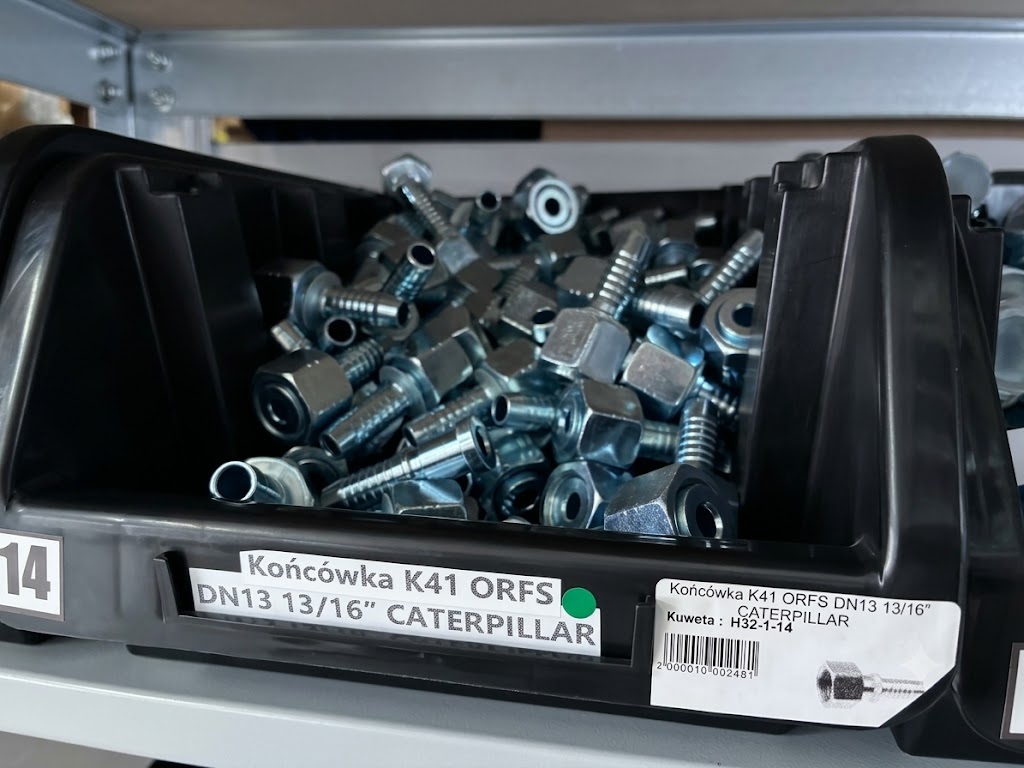
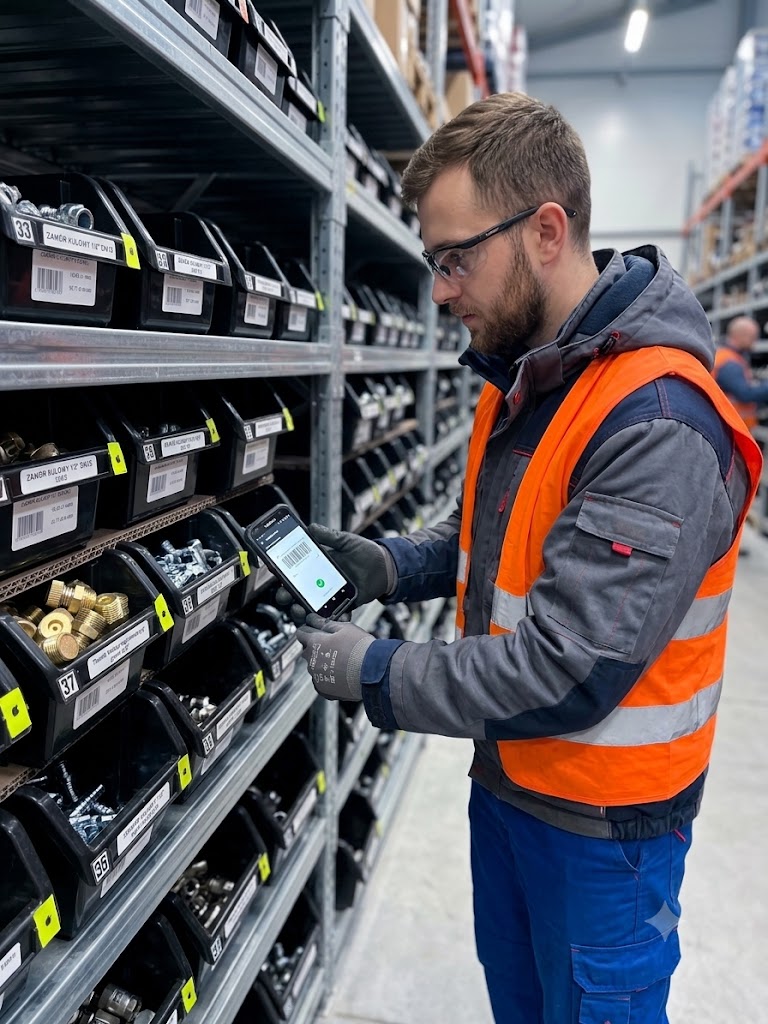
A warehouse label is not just a barcode carrier; it serves as a key element of the inventory control system. It moves the ordering process directly to the storage location, eliminating the need for paper documentation or manual index transcription. Thanks to the standardization of markings, the IT system always synchronizes with the actual state in the warehouse, which eliminates discrepancies between the physical goods and the data in the application.
Label configuration tailored to operational needs
We understand that warehouse organization varies depending on the scale of operations. Therefore, our labeling system offers full configuration flexibility. You can independently define the set of data to be presented on the label to ensure the highest clarity and speed of product identification:
-
Barcode and EAN: The primary identifier, enabling instant retrieval of the product page in the application without the risk of misinterpretation by the search engine.
-
Product name: The technical designation of the goods ensuring rapid visual verification.
-
Product photo: An optional graphic element, significantly shortening the identification time for visually similar components.
-
Warehouse location: Data enabling precise assignment of the product to a specific shelf location, facilitating space management.
-
Price list (net/gross): The ability to display current prices directly next to the product, allowing for constant control of procurement costs.

The ordering process flow
The system is designed so that the procurement process takes place in four steps, minimizing the involvement of office work:
-
Inventory monitoring: Identification of stock levels directly at the shelf.
-
Scanning: Using the built-in scanner in the application to read the label.
-
Adding to cart: Automatic redirection to a specific product page.
-
Finalization: Confirming the quantity and submitting the order.
This path eliminates the need for tedious searching through purchase history and minimizes the risk of ordering the wrong component.
Benefits of system implementation
-
Time optimization: Moving the ordering process to the storage location eliminates the need for working at a desktop computer.
-
Clarity and durability: The label materials used ensure high resistance to warehouse conditions, and the printing technology guarantees reading correctness even in case of slight dirt.
-
Warehouse discipline: Systematic marking of bins enforces order in the inventory structure and facilitates monitoring of stock shortages.
Have you already implemented our system in your warehouse? If not, we invite you to contact us. We will help configure the data set on the labels that will best support the logistics processes in your company.