










Hose crimp fittings
Produkty z kategorii
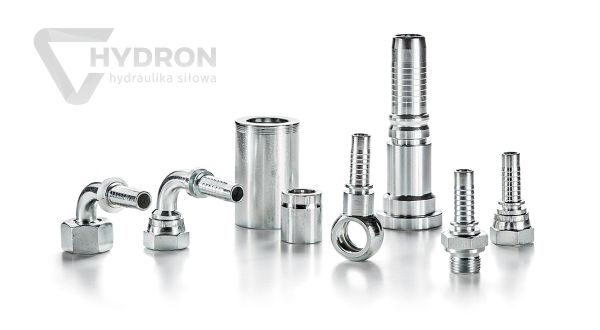
Fittings, hydraulic hose ends
- Click to download the cheat sheet (types of hydraulic hose crimp fittings)
- Click to download the search guide (types and codes of basic fittings)
- Click to check the maximum working pressure of hose crimp fittings
- Hose fitting tightening torque (with what force to tighten the fittings)
Hydraulic hose crimping hardware
We offer all kinds of fittings (commonly known as: crimps, fittings, hose ends) and crimp ferrules (sleeves) designed for crimping high-pressure hydraulic hoses. We sell metric, inch, UNF, flange, banjo, KARCHER fittings and many others. Our offer includes, alongside standard fittings for 1SN, 2SN, 4SP hoses, also 4SH INTERLOCK hardware. All fittings and sleeves are referred to as hydraulic hose crimping hardware.
Hydraulic hose crimp fittings
Our hydraulic power store Fittings, commonly referred to as hydraulic crimps or terminations, are a component of every complete (crimped) hydraulic hose used to transmit power in machines and devices. Hose fittings are also referred to as "hose nipple"
Types of fittings for hydraulic lines:
- metric fittings
- banjo fittings,
- BSP inch thread fittings,
- American JIC fittings, ORFS fittings,
- STECKO fittings for mining
- fittings for cleaning equipment (Karcher)
- SAE flange fittings (SFL, SFS)
- Nissan, Toyota type fittings, Komatsu, JCB, CAT
- gas fittings (gas cylinders)
- cab tilt line fittings
- pipe fittings for welding and ring connection
- fittings for agricultural, mining, and forestry machinery
- pneumatic hose fittings
- brake line fittings
- hose nipples with internal threads
- nipples with external threads
Available in galvanized or stainless steel.
Types of connections used in hose fittings
- Metric threads (DIN with 24-degree cone) The most popular type of connection in Europe. This type of connection takes its name from Germany: 24° cone fitting DIN (German Institute for Standardization). The entire connection is based on a 24-degree cone. The male fitting connects with the female fitting on matching seats. Metric connections are available with or without an O-ring. Fittings of this type are available in light version L and heavy version S (depending on the pressure). The heavy version is intended for higher working pressures. For example, male fitting P21 10 12L M18x1.5 has a recess for a 12mm cone - the female fitting must have a cone of the same size for the connection to be tight, e.g., P51 10 12L M18x1.5. This type of fitting is identified by specifying the hose size, e.g., 10, the cone size 12L (L stands for LIGHT version), and the thread M18x1.5. Examples of fittings with tapered metric threads: DKOL, DKOS, CEL, CES. See also: Metric connectors and connections
- BSP threads. BSP (British) threads are very common in Europe and around the world. We most often encounter parallel BSP threads along the entire length (tapered threads also occur). Connection in this type of fitting is most often achieved on a cone (the seat is spherical). See also: adapters, BSP inch nipples
- SAE / JIC. A connection that originated in North America (fittings of this type are called American fittings). Initially, they were used for pipe connections - the pipe was flared at the end and a nut was added. The name of this type of connector comes from the JIC (Joint Industrial Council). The cone in this type of connection is 37°, and the fittings are referred to as flare (from the characteristic cone that resembles a funnel). See also: JIC / UNF connectors
- NP threadsTF Thread type used mainly in North America. NPTF tapered pipe thread is used where extremely high pressure is required (e.g., hydraulic pumps, etc.). NPTF connections, due to their construction, can transmit very high pressures ranging from several hundred bars up to several thousand. Tapered threads are sealed by the increasing interference of the threads as the fitting is tightened (the cones interlock). Very often, Teflon tape or another type of sealant is also used to ensure a good seal along the thread crests.
- Other less popular connection types: Komatsu Metric 30° Flare, Japanese JIS 30° Flare Parallel Pipe Thread, French Metric Fittings, O-Ring Boss (ORB) Thread
Read more about hose fittings:
- types of seals in hose crimp fittings
- 4SH INTERLOCK hose fittings
- symbols for hydraulic hose fittings
- types of crimp ferrules for hoses

What is a hose fitting?
A hose fitting is an element used in hydraulic, pneumatic, and other installations, allowing for the connection of any flexible hose with other system components, such as threaded connectors, valves, manifolds, or pumps. Thanks to it, it is possible to ensure tightness, durability, and safety of flow of any medium (e.g., hydraulic oil), even in demanding high-pressure conditions. Hose fittings are a key element of the installation because they allow for easy and quick connection of hoses and lines with other system components without the risk of leaks. They can be used in many industries, such as hydraulic power, the chemical industry, agriculture, pneumatics, or transport.
What elements do hose fittings consist of?
Taking the example of a DKOL fitting (with a metric thread and a 24° cone), we can distinguish the following elements: Fitting body (sometimes called a hose tail) This is the main part of the fitting that is inserted into the hose. The body has a suitable profile for hose crimping and a thread or cone on the other side, allowing for connection with other system components (e.g., connectors or manifolds). In the case of a DKOL fitting, the body has a 24° cone that works with the seat in the connector, ensuring tightness.
Fitting nut. The nut is used for tightening the fitting to a connector or other system component. In DKOL fittings, the nut is adapted to a metric thread according to the DIN 2353 standard. Depending on the type of fittings, threads can be metric, BSP inch, UNF, or ORFS. Teflon washer: the washer is used to keep the nut on the body. In some fittings, the nut is crimped onto the body.
How is a hose fitting attached to the hose?
A hose fitting can be attached in two ways, depending on the type of installation, application, and required pressure: Crimping on the hose using crimp ferrules - This is the most popular mounting method in hydraulic power, which is based on high pressures. The fitting is inserted into the hose, and then the crimp ferrule (so-called hose sleeve) is crimped using a hose crimper. Such a connection ensures durability and tightness even at very high pressure. The second method of mounting a fitting on a hose is Mounting using a hose clamp (e.g., GBS) In low-pressure installations or where crimping is not required, the hose fitting can be mounted using a clamp, such as a GBS type clamp. The clamp is tightened on the outer layer of the hose, which ensures proper pressure on the fitting and prevents it from slipping off. Clamp mounting is allowed only at low pressure, e.g., in pneumatic hoses and other low-pressure hoses.
Why are hose fittings used?
Hose fittings perform several key functions in hydraulic and pneumatic systems: Ensuring tightness -Fittings guarantee that the medium (e.g., hydraulic oil, water, or compressed air) will not leak from the installation, even under high pressure. Easy connection of components -Thanks to different thread types and standards, fittings allow for quick connection of the hose with valves, connectors, or manifolds. Increasing safety -A well-chosen fitting reduces the risk of installation leakage, which could lead to failure or accidents. Adaptation to different types of installations -Fittings come in many variants (straight metric fittings, elbow inch fittings, flange fittings), so they can be adapted to any system configuration.
Hose tail – or hose fitting
In the world of hydraulic power, terms such as "hose tail", "hose nipple", or "hose fitting" are often used interchangeably, although they refer to the same element. A hose tail is a key element of the hydraulic system, which on one side is fixed to the hose by crimping or by using a GBS steel hose clamp, and on the other side has threads enabling connection with other components. Types of tails in the Hydron offer: External thread tails: Metric: For example, CEL fittings, which comply with metric standards and are commonly used in Europe. Inch: For example, AGR fittings, equipped with BSP threads, used in international systems. Internal thread tails: For example, DKOL fittings, which have internal threads and are used in metric systems. Why is it worth knowing the difference? Selecting the appropriate tail (or fitting) is crucial for the tightness and durability of the hydraulic system. Both the thread type (metric or inch) and the type (external or internal) must be compatible with the other elements of the installation. Regardless of the name – tail or fitting – all these elements play the same role, enabling the connection of a hose with another element. Check our offer and find a solution perfectly tailored to your needs!
Hydraulic fittings - hose crimps
Hydraulic hose hardware is a set of elements that enable the connection and securing of hydraulic hoses in hydraulic systems. These are special components (fittings + ferrules + connectors), which are of key importance for the proper functioning of the hydraulic system, providing not only the correct connection of hoses, but also sealing and protection. Hardware for hose crimping is also referred to as hose crimps or fittings for hose crimping. Hardware is nothing more than fittings and crimp ferrules, which are crimped onto hydraulic lines using a hose crimping press. The main functions of hydraulic hose hardware are 1) connecting hoses: Hardware enables the connection of two or more hydraulic hoses, creating continuity of flow of the working fluid in the system. Different types of hardware are available, such as fittings, connectors, tees that are matched to the type and size of the hose. 2) sealing: Hardware is responsible for ensuring the tightness of the hydraulic hose connection.
Hose hardware
Hydraulic hose hardware is available in different sizes, thread types, and materials, such as carbon steel, stainless steel. Depending on the application requirements. It is important to select the appropriate hardware for the specific type of hydraulic hose and the system's operating parameters to ensure reliable and safe operation of the hydraulic system.
Classification of hose hardware:
- standard hardware (fits 1SN, 2SN, 4SP hoses)
- 4SH hose hardware (INTERLOCK)
Basic classification of hose hardware due to threads used:
- metric thread fittings
- BSP inch thread fittings (British)
- UNF / JIC thread fittings (American)
- ORFS thread fittings (American)
- flange fittings
Full range of hose fittings
Hardware, or hose fittings, can come in versions of straight fittings, 90-degree elbow fittings, 45-degree elbow fittings, or others (e.g., 180 degrees) Our offer includes nearly 2,000 items of hose fittings - we have practically all existing types, sizes, and threads used in various types of hoses used not only in hydraulic power but also in pneumatics, central lubrication, and others.
Hydraulic hose fittings
A hydraulic fitting is a fastener used in hydraulic power, mounted on the ends of hydraulic lines (hoses). Its task is to permanently connect the hose with another system component (e.g., pump, cylinder, or manifold) and to ensure a tight and durable transmission of liquid under high pressure. Hydraulic fittings are crimped on hoses using ferrules and a press – this process is known as hydraulic hose crimping – which guarantees a solid seating of the fitting without the risk of oil leakage. Hydraulic fittings are a component of hydraulic lines that are used in all machines and devices equipped with a hydraulic drive. They are commonly found in construction machinery (e.g., excavators, loaders), agricultural machinery (tractors, combines), and various types of industrial machinery (presses, production lines, etc.). In practice, wherever oil circulates under high pressure, flexible lines are connected to components specifically via appropriate fittings.
Types of hydraulic fittings
There are many types of hydraulic fittings adapted to various connection standards. The most commonly used include threaded fittings (with metric, BSP inch, UNF threads, etc.), flange fittings, tube fittings, and many other specialized fittings such as washer hose fittings, WEO fittings, etc.
Hydraulic hose crimps
Complete crimps for hydraulic hoses. Crimp = Hose fitting + ferrule (crimp sleeve). Hose fittings are the common name for metal fittings intended for crimping on flexible rubber lines. A complete hydraulic crimp consists of a hose fitting and a ferrule, i.e., a crimp sleeve intended for crimping the fitting on the hose. In the category below, you will find complete crimps, i.e., a fitting along with a ferrule dedicated to a specific type of hose. We have crimps for 1SN single-braid hose, 2SN double-braid hose, 4SP four-braid hose, and special crimps for 4SH hoses (in the INTERLOCK double lock version )
Types of hydraulic crimps
Based on the type of material, we distinguish: hydraulic hose fittings made of carbon steel (standard), fittings made of acid-resistant stainless steel, fittings made of carbon steel coated with zinc-nickel. Among hydraulic crimps, we also distinguish by the necessity of skiving the hose before crimping: standard crimps (without skiving the hose), 4SP crimps requiring external skiving of the hose before crimping, INTERLOCK double lock crimps requiring internal and external skiving. Another division is by the threads used: metric crimps, British BSP inch crimps, American crimps, i.e., crimps with JIC and ORFS threads with a flat seal. There are also other types of crimps (other crimps), including: reusable screw-on fittings (used, among others, in central lubrication), STECKO fittings (used mainly in mining), special WEO system fittings (i.e., a modern plug-in connection system)
Order any hose crimp in our store
In the HYDRON online store, you can buy any type of crimp, i.e., any type of fitting intended for crimping on hoses. If you cannot find a specific size, please contact the sales department - we will be happy to help and supplement our offer. Our offer includes over 2,000 different items of hose fittings of all types, sizes, threads, and seal types. +
Photo gallery: hydraulic crimps, hose crimp fittings


