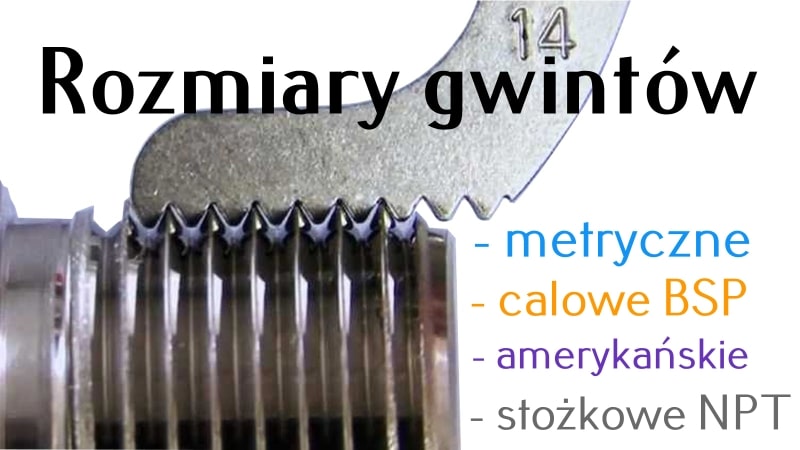
Hydraulic thread sizes
Produkty z kategorii
Hydraulic thread sizes
Guide to threads used in power hydraulics
On this page, you will find a practical summary of the available types of threads used in power hydraulics: metric, inch BSP, JIC, ORFS and NPT. Each category allows you to quickly check standard sizes and select appropriate fittings and installation components. Hydron, as an experienced supplier of hydraulic components, offers a wide selection of fittings and accessories tailored to various types of threads. This makes it easy to choose solutions compatible with your system – regardless of whether you work in agriculture, construction, industry or machine service. Check the thread sizes and use the help of Hydron experts to select elements that guarantee tightness, durability and reliability of hydraulic systems.
Metric threads (M)
Threads metric are the most commonly used standard in Europe. They are marked with the letter „M” and the thread diameter and pitch in millimeters. They come in fine and normal versions, which allows for precise fitting. Thanks to a wide range of sizes, they work well in many hydraulic systems. They are easily available and compatible with installation components.
BSP Threads (British Standard Pipe)
Threads BSP is an inch standard used mainly in hydraulics and pneumatics. They come in two varieties: BSPP (parallel) and BSPT (tapered). They provide tight and durable connections in hydraulic hoses. They are commonly used in industrial and agricultural machinery. Their wide selection makes it easy to choose for many applications.
JIC Threads (Joint Industry Council)
Threads JIC are inch connections with a 37° flare. Thanks to this, they are characterized by high tightness and resistance to high pressures. Commonly used in hydraulic installations requiring reliability. They are used in heavy industry, aviation and the automotive industry. It is a universal American standard valued worldwide.
ORFS Threads (O-Ring Face Seal)
Threads ORFS is a connection system with an O-ring seal. Thanks to this, they guarantee exceptional tightness even at high working pressures. They are used in installations requiring reliability and resistance to vibration. Popular in heavy industry, construction machinery and mobile hydraulics. They eliminate the risk of hydraulic oil leaks.
NPT Threads (National Pipe Taper)
Threads NPT are tapered inch threads, widely used in America. Sealing is achieved through a tapered design and additional sealants (e.g. Teflon tape). Often used in pressure systems and industrial installations. Resistant to high pressures and easy to install. It is one of the most widespread standards in the USA and worldwide.
Designation of thread type and connection type
| BSP | British Standard Parallel Pipe Thread | inch pipe |
| BSPT | British Standard Taper Pipe Thread | inch pipe, tapered |
| JIC | Joint Industry Conference (SAE 74°) | inch UNF |
| JIS | Japanese Industrial Standard (e.g. Komatsu) | inch BSP or metric |
| M | Metric | |
| NPSM | American National Pipe Thread – Straight Mechanical | inch pipe |
| NPTF | American National Pipe Thread – Taper (Dry Seal) | inch pipe |
| ORFS | O-Ring Front Seal | inch UNF |
| G | = BSP | |
| R | = BSPT | |
| SAE | Society of Automotive Engineers (90°) | inch UNF |
| UNC | Unified Coarse Thread | inch |
| UNF | Unified Fine Thread | inch |
| W | Whitworth Thread | inch |
Thread diameters in power hydraulics
Thread diameters are one of the most important parameters that must be correctly identified when selecting fittings, adapters and other components of power hydraulics. In service practice, it is precisely the incorrect determination of the thread diameter that is one of the most common causes of leaks, assembly problems and damage to threaded connections. In power hydraulics, thread diameters occur in both metric standards, as well as inch standards, and their designations do not always refer directly to the actual diameter measured with a caliper. This applies, among others, to BSP, NPT or UNF threads, where the nominal thread size does not correspond to its external or internal diameter.
How to understand hydraulic thread diameters
The term thread diameter most often means the outer diameter of a male thread or the inner diameter of a female thread. In the case of metric threads, this value is given in millimeters, while in inch threads, inch designations are used, which require reading from dimension tables. In practice, this means that measuring the diameter alone is not enough for correct thread identification. It is also necessary to determine the thread pitch, the profile angle and the thread type, because different standards may have very similar diameters but completely different geometry.
Diameters of inch and metric threads - differences
Inch threads, such as BSP or NPT, have a characteristic profile angle and a specific number of threads per inch. For example, BSP threads have an angle of 55 degrees, and NPT 60 degrees, which has a direct impact on the possibility of joining them. Despite similar diameters, these threads are not compatible with each other. Metric threads used in European hydraulics are based on designations in millimeters and usually have a cylindrical thread. Their diameters are easier to identify, but here, too, it is important to distinguish between internal and external threads and to check the pitch.
Why the correct determination of the thread diameter matters
An incorrectly selected thread diameter can lead to connection leaks, damage to the thread socket or the need to re-dismantle the installation. In power hydraulic systems where high working pressures occur, this has a direct impact on the safety and durability of the entire system. Therefore, when selecting fasteners, it is always recommended to use thread size tables and proven dimensional summaries that clearly define thread diameters for individual standards.
Thread catalog- a summary of standards developed by Hydron
A thread catalog is a practical tool that significantly facilitates the selection of appropriate connections in power hydraulics and high-pressure systems. At Hydron, we have collected the most important information regarding sizes, designations and types of threads in one place, creating a clear and functional hydraulic thread catalog. Thanks to this, the user does not have to compare data from many sources – all standards, such as metric, BSP or NPTthreads, have been arranged in a clear form. This solution allows you to quickly identify the correct thread and select compatible installation components. In practice, the Hydron thread catalog is not only a knowledge base, but real support in everyday work – both for professionals and for people assembling components for pressure washers or hydraulic systems. Proper thread selection has a direct impact on the tightness, safety and durability of connections, which is why access to reliable data is key. Using the thread catalog developed by Hydron, you can quickly match hydraulic connectors, hoses or other components, building an installation that works reliably and without the risk of assembly errors.
Hydraulic thread diameter tables at Hydron
On the Hydron website , detailed summaries are available, covering the diameters of metric and inch threads used in power hydraulics. These tables allow you to quickly compare diameters, pitches and thread types, which significantly facilitates the identification and selection of appropriate fittings, adapters and seals. Thanks to this, the user can efficiently select the right solution for both new installations and for service work and modernization of existing hydraulic systems.
Metric threads
| Thread | Outer diameter [mm] | Pitch [mm] |
|---|---|---|
| M10×1 | 10 | 1 |
| M12×1,5 | 12 | 1,5 |
| M14×1,5 | 14 | 1,5 |
| M16×1,5 | 16 | 1,5 |
| M18×1,5 | 18 | 1,5 |
| M20×1,5 | 20 | 1,5 |
| M22×1,5 | 22 | 1,5 |
| M24×1,5 | 24 | 1,5 |
| M27×2 | 27 | 2 |
| M30×2 | 30 | 2 |
| M33×2 | 33 | 2 |
| M36×2 | 36 | 2 |
| M39×2 | 39 | 2 |
| M42×2 | 42 | 2 |
| M45×2 | 45 | 2 |
| M48×2 | 48 | 2 |
| M52×2 | 52 | 2 |
BSP threads (inch)
| BSP thread | Outer diameter [mm] | Pitch (th./inch) |
|---|---|---|
| G 1/8” | 9,728 | 28 |
| G 1/4” | 13,157 | 19 |
| G 3/8” | 16,662 | 19 |
| G 1/2” | 20,955 | 14 |
| G 3/4” | 26,441 | 14 |
| G 1” | 33,249 | 11 |
| G 1 1/4” | 41,91 | 11 |
| G 1 1/2” | 47,803 | 11 |
| G 2” | 59,614 | 11 |
JIC threads (UNF 37°)
| JIC thread | Diameter [inch] | Threads per inch |
|---|---|---|
| 7/16-20 UNF | 7/16” | 20 |
| 9/16-18 UNF | 9/16” | 18 |
| 3/4-16 UNF | 3/4” | 16 |
| 7/8-14 UNF | 7/8” | 14 |
| 1 1/16-12 UNF | 1 1/16” | 12 |
| 1 3/16-12 UNF | 1 3/16” | 12 |
| 1 5/16-12 UNF | 1 5/16” | 12 |
| 1 5/8-12 UNF | 1 5/8” | 12 |
| 1 7/8-12 UNF | 1 7/8” | 12 |
| 2 1/2-12 UNF | 2 1/2” | 12 |
ORFS threads (UNF with o-ring seal)
| ORFS thread | Diameter [inch] | Threads per inch |
|---|---|---|
| 9/16-18 UNF | 9/16” | 18 |
| 11/16-16 UNF | 11/16” | 16 |
| 13/16-16 UNF | 13/16” | 16 |
| 1 3/16-12 UNF | 1 3/16” | 12 |
| 1 7/16-12 UNF | 1 7/16” | 12 |
| 1 11/16-12 UNF | 1 11/16” | 12 |
| 2-12 UNF | 2” | 12 |