






back to : FAQ - troubleshooting
Also check : gradual wear of consumables
Cutting blade damage in a hose cutter
All offered by us hose cutting blades are intended for professional hose cutters. We offer only original SAMWAY, UNIFLEX, etc. cutting blades. All cutting blades are X-ray scanned, which detects all types of damage and material defects. We do not use cheap substitutes !. We use cutting blades ourselves and we know exactly how to handle them.
Tips for using the cutting blade
For the blade to fulfill its task, we must follow certain general rules.
- do not overheat the cutting blade
Continuous hose cutting without a break can cause overheating of the cutting blade and its damage. How to extend the life of the cutting blade : The first 10 cuts with a new blade should be performed very slowly and carefully. After the first ten cuts, you can cut faster, but do not overload the motor. Do not overheat the cutting blade.
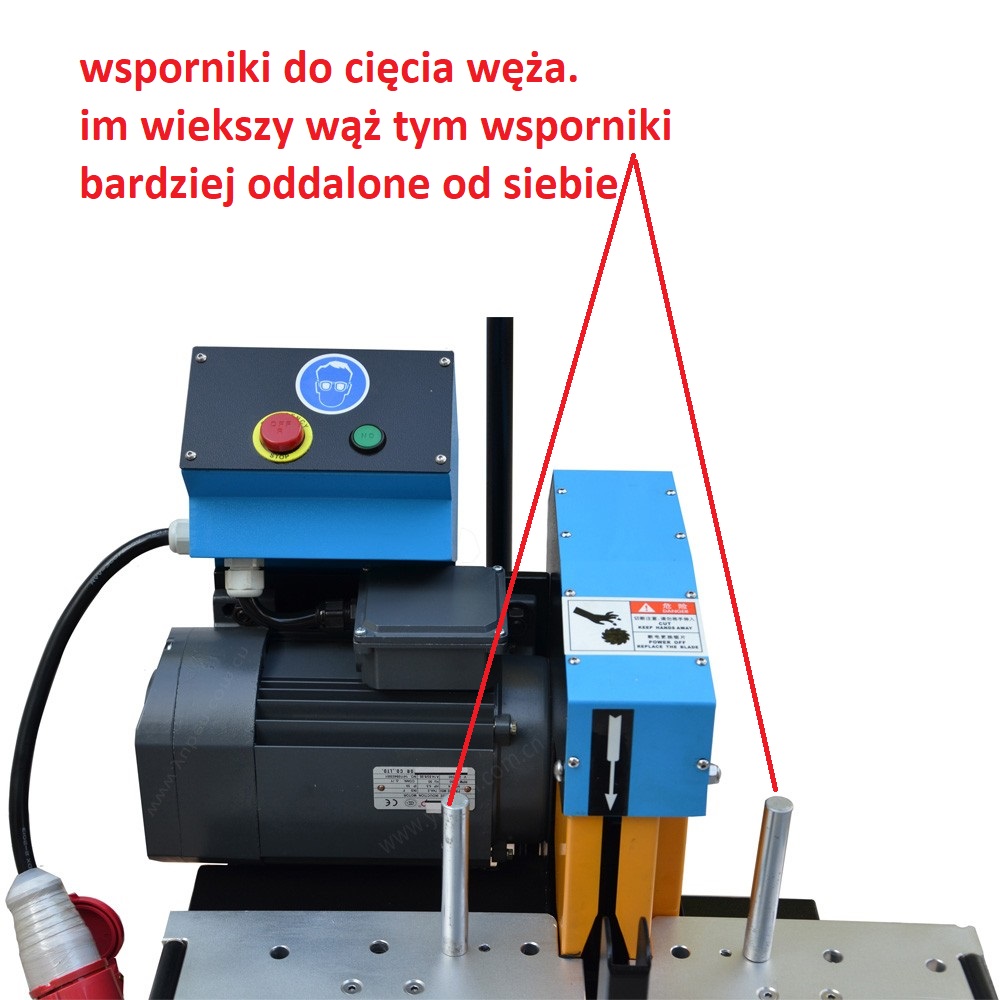
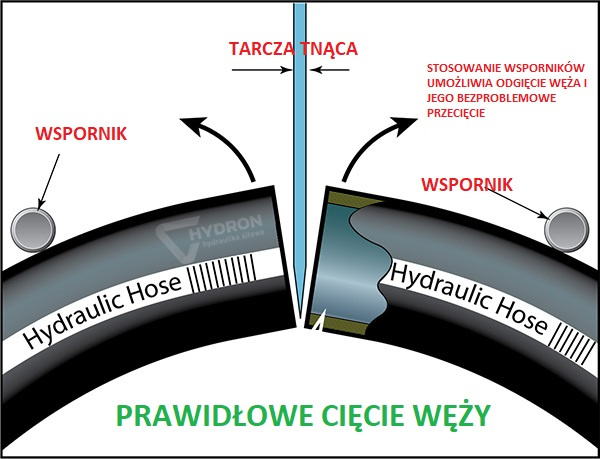
- supports should be used in the cutter
A very important thing when cutting larger hoses. Customers forget how important it is to use supports, which create a special bend in the hoses so that they can be cut without obstacles. Lack of supports causes the blade to overheat or be damaged.
- read the cutter's instruction manual
Detailed information on the use of supports, etc. can be found in the instruction manual included with the cutter. It is essential to read the manual before proceeding to cut.
- check the cutter's RPM
To cut properly, cutters should have an RPM range of 2800-3500 revolutions per minute. Such RPM guarantees correct cutting - the hose will be cut correctly and not frayed. Lack of required RPM or too high RPM can cause damage to the cutting blade.
- special care should be taken with 4SP, 4SH hoses
Special care should be taken when cutting multi-braid hoses such as 4SP, 4SH hoses, which consist of 4 layers of metal braids ! To protect the blade from damage, these hoses must be cut really carefully and slowly. Most often, we can damage cutting blades by cutting multi-braid hoses too fast > we overheat the blade or break it because metal meets metal too quickly.
If we do not follow the above rules, we will cause damage to the cutting blade, which sooner or later will lead to its destruction ( cracks and minor damages will eventually cause irreversible destruction of the blade. The most common cause of cutting blade damage is cutting hydraulic hoses too fast !
- The warranty does not cover mechanical damage to the cutting blade
- The warranty does not cover normal wear and tear of the cutting blade (the more we cut, the faster we wear it out, just like with car tires > the more we drive, the faster we wear them out)
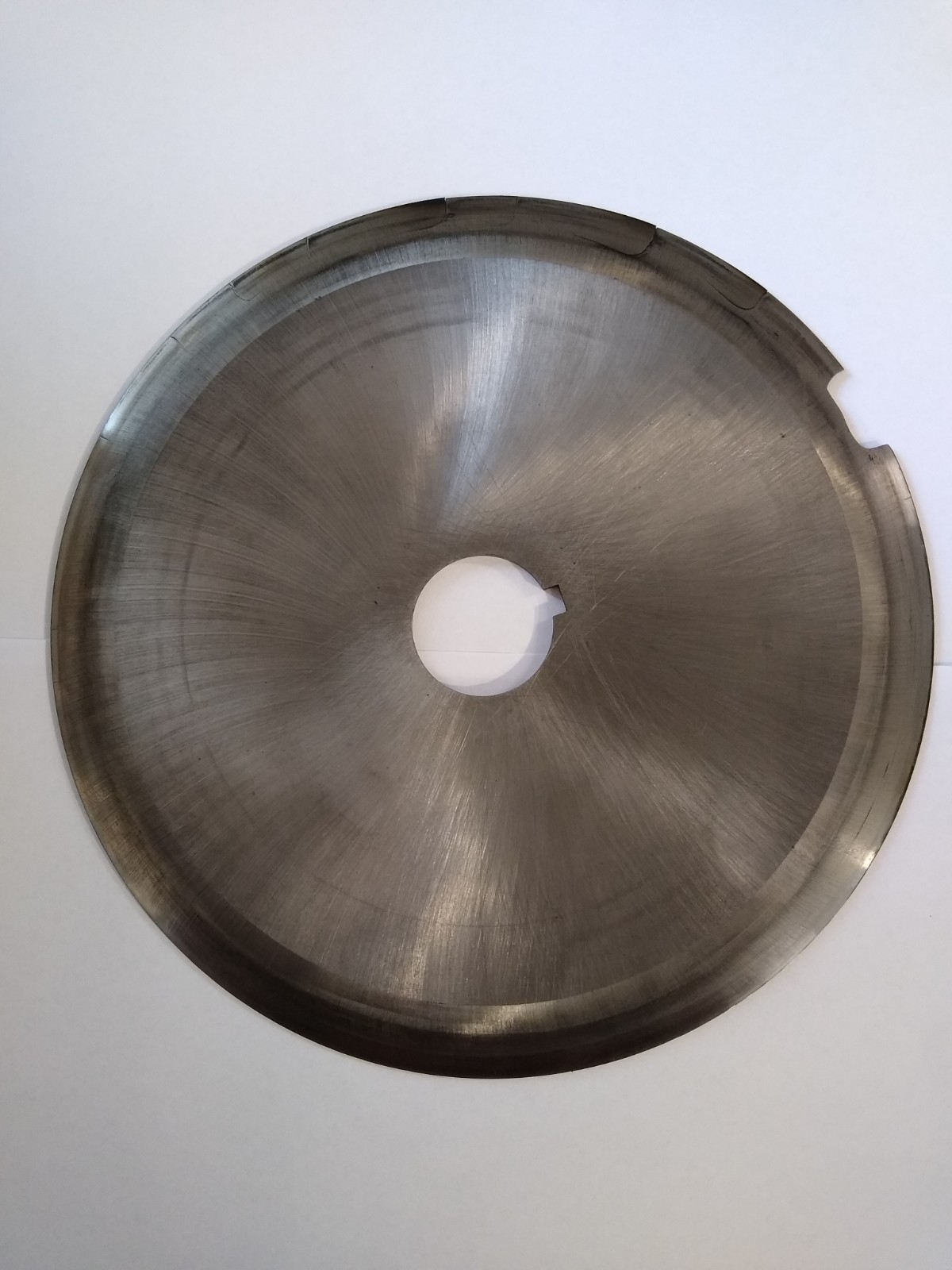
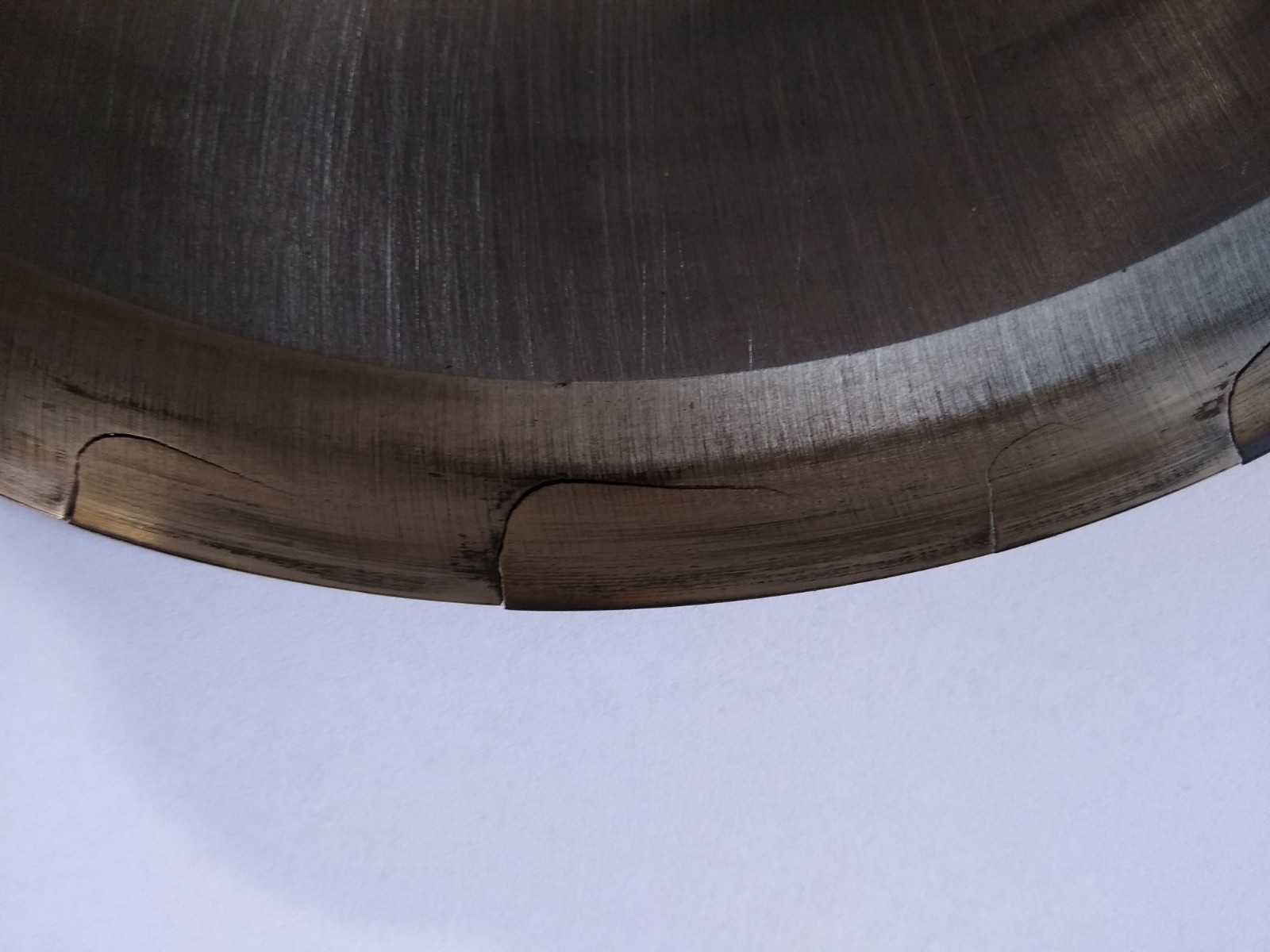
This is what a damaged cutting blade looks like :