










Back to section : troubleshooting
How to check if the solenoid valve is working properly ?
Despite pressing the button crimping machine does not react ?
Follow the steps below to check.
1. If the crimping machine was moved to another location ( to another power socket ) check the direction of motor rotation ( if necessary change phases L1 to L3 in the socket )
Checking the hydraulic solenoid valve
2. If the motor rotation is correct check if the solenoid valve located under the head works properly
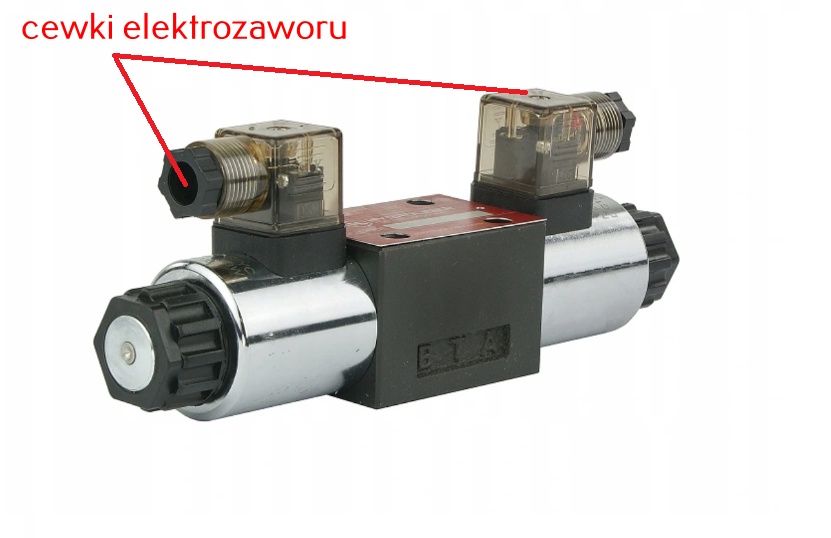
- check if the solenoid coils are working ( press crimping and check if the coil lights up red, check opening and check the second coil )
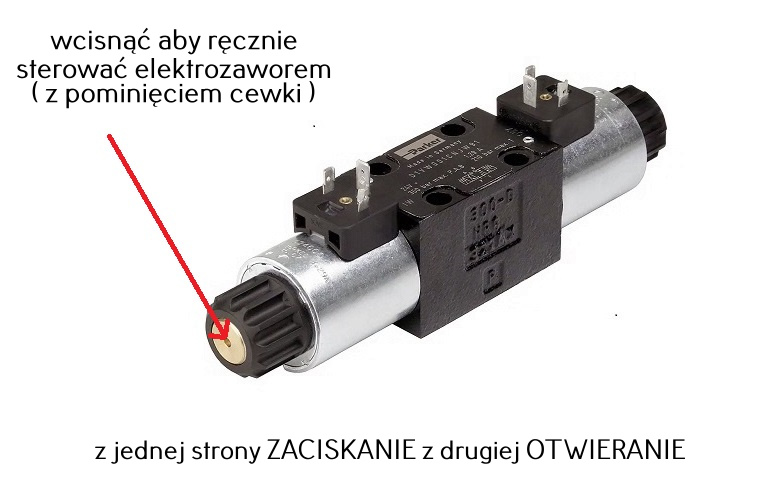
- press the point marked in the photo to check mechanically if the solenoid valve will work ( this is a way to control crimping and opening without an electrical signal from the coil ) all it takes is an Allen key and pressing the marked point for the solenoid valve to start working ( crimping or opening ) depending on whether we pressed the left or right valve.
These are things you can do yourself without fear of damaging the machine
In the event that the main jaws do not work ( opening or closing ). By pressing the opening or closing button, we check if the indicator lights near the solenoid valve light up ( under the head, two coils on the sides ) both should light up when pressed. If the LED on the coil does not light up, we unscrew the front panel of the machine (Allen screws) and plug in the cable connector , which has most likely slipped out of the control board. ( connectors are labeled and size-matched so as not to make a mistake ).In other cases, the solenoid valve has most likely jammed. In this case, use a Phillips screwdriver to unscrew both connectors leading to the solenoid valve ( under the head ). Then, using an Allen key, unscrew the four Allen screws with which the solenoid valve is tightened to the manifold block.
Solenoid valve check
I suggest placing a small cloth under the solenoid valve; some oil will leak out after unscrewing. After removing the solenoid valve, we visually check if there is any mechanical contamination in the four channels causing jamming. There are four small O-rings in the channels, so we are careful not to lose them. Next, unscrew the two coils on the sides and check if the plungers on both sides are working. Sometimes it is enough to tap it to unblock the plunger. In the event of the solenoid valve jamming, the closing of the jaws does not work or the jaws even close all the way until an overload is heard; in such cases, the machine should be disconnected immediately. It may even happen that the motor rotation direction changes under pressure, but these are extreme situations.
Also check: