






back to : hydraulic hose fittings

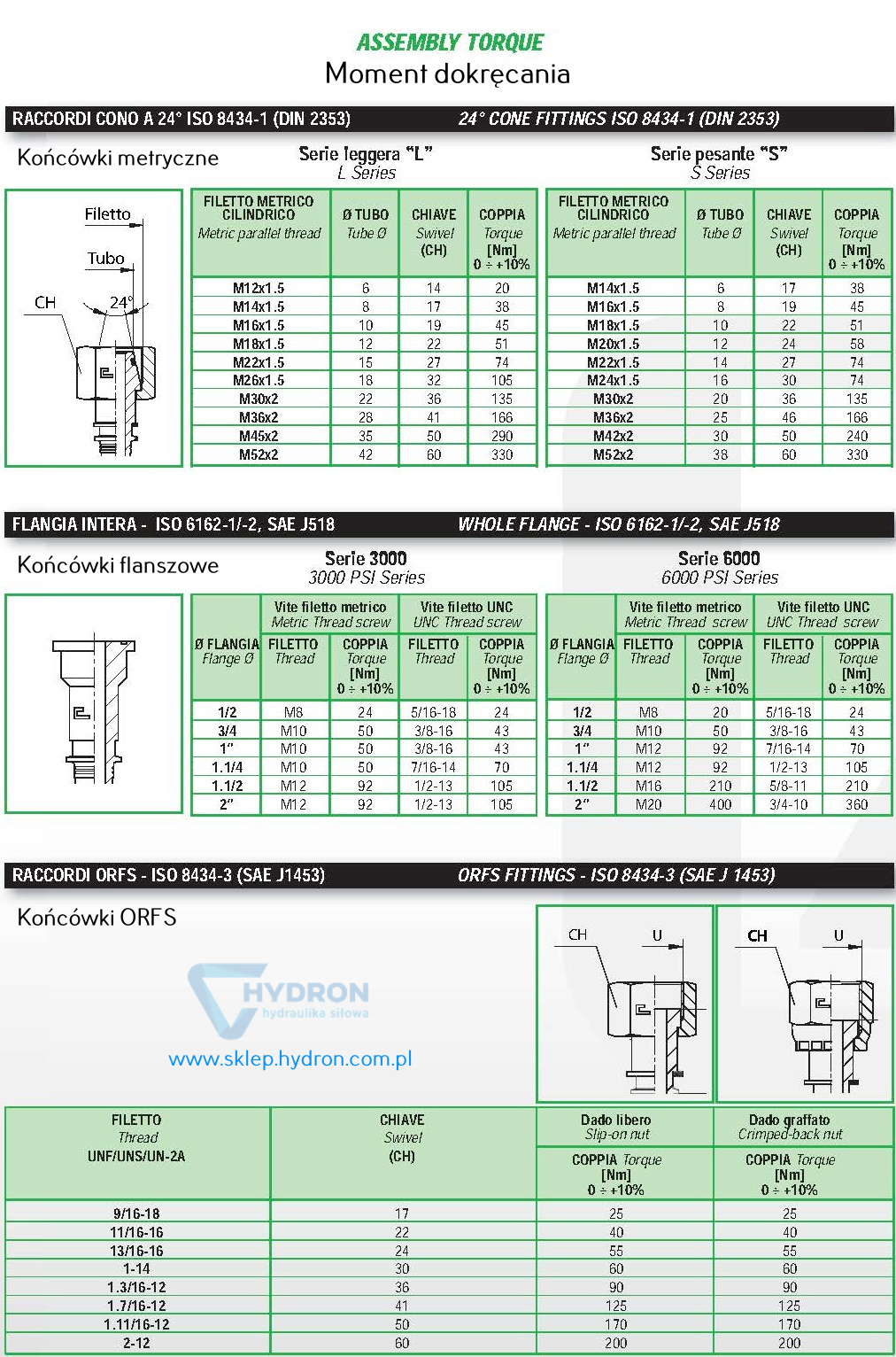
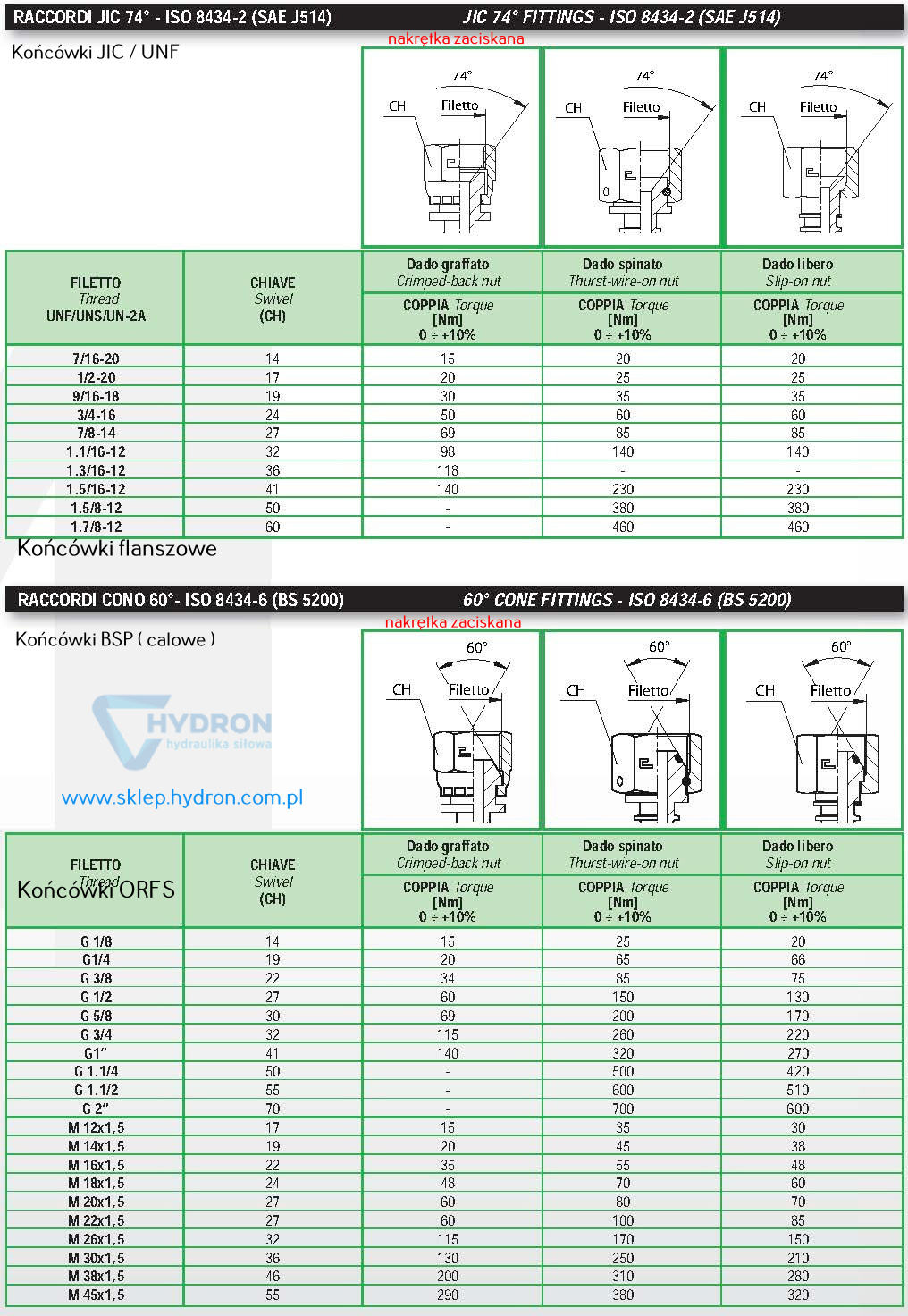
Tightening torque for hose fittings
With what force should hydraulic hose fittings be tightened ?
Tightening torque, also known as bolt torque, is a measure of the force required to tighten or disconnect a bolted joint. It is the force that must be applied to the bolt to ensure proper tension in the joint. Tightening torque is an essential parameter when assembling various power hydraulic components.
Remember : fittings with a crimped nut are tightened with less force than fittings with a loose nut ( slipped on or wired )
Tightening torque is expressed in units of force multiplied by length, for example in Newton-meters (Nm) or degrees per second (Nm/s). In the case of bolted joints, tightening torque is a key parameter because it affects three important factors:
-
Tension: Proper application of tightening torque ensures appropriate tension in the bolted joint, which is necessary to maintain the stability and durability of the connection. Too little torque can lead to a loose connection, while too much torque can lead to exceeding the yield strength of the material or damaging the thread.
-
Safety: Correct tightening of a bolted joint ensures the safe operation of the elements that are connected. Improperly tightened connections can lead to loose or undertightened components, increasing the risk of damage or failure.
-
Tightness: In some applications, such as hydraulic or pneumatic connections, proper tightening of the bolts ensures the tightness of the joint. Improperly tightened connections can lead to leaks or loss of pressure.