










back to : manual hose crimpers
User manual for the SAMWAY P18HP mobile hose crimper
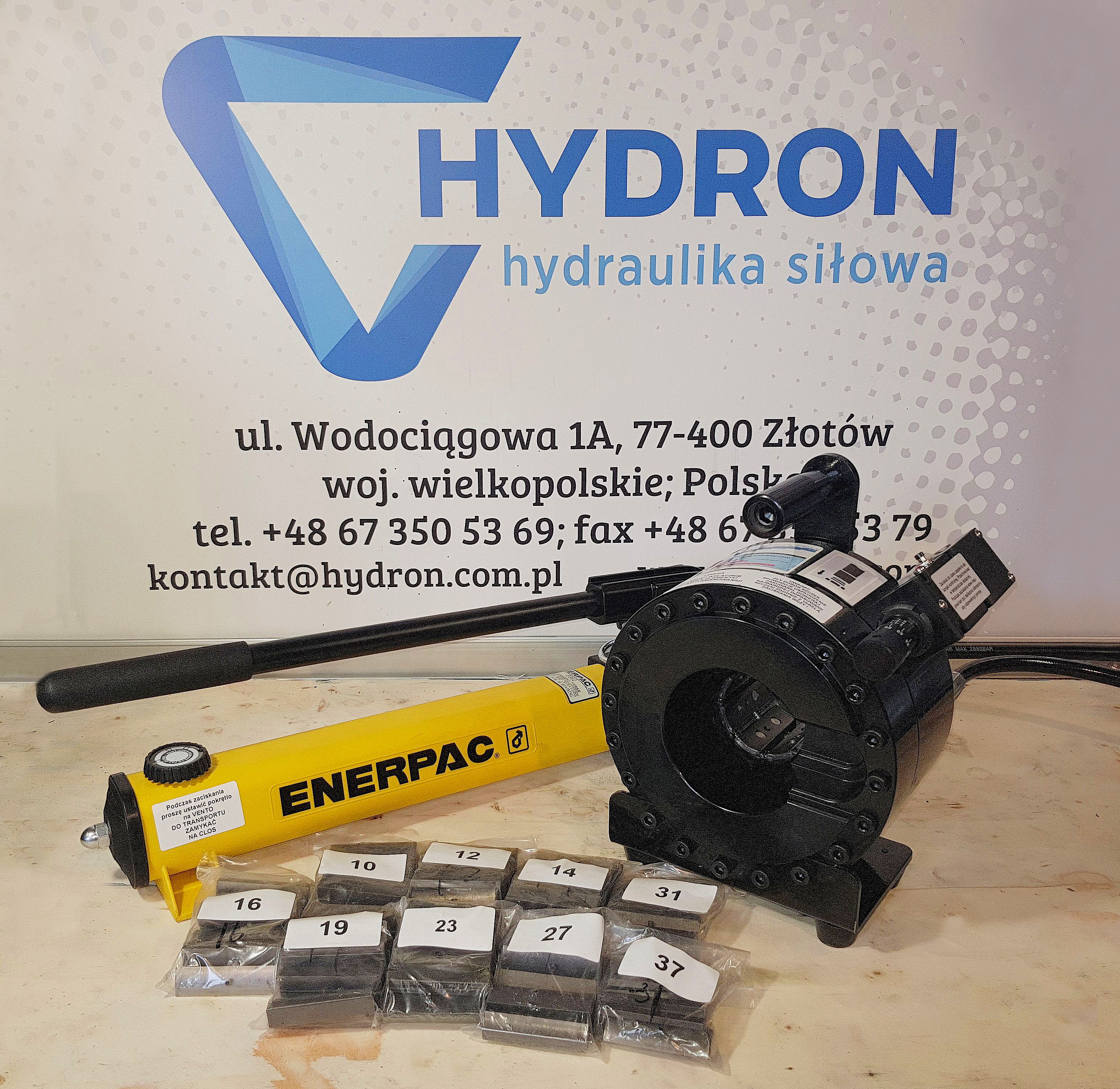
Inserting and removing dies P18HP crimper
Tip: Select the dies closest to the hose being crimped. Example: DN10 mm 3/8 inch 2SN two-wire hose. Knowing the hose size and the number of steel braids, we check the approximate crimping table to see what value the hose should be crimped to. In this case, 20,6 mm. Then apply the closest dies below the value of 20,6 mm. In this case, these are die number 19.
Micrometer setting P18 crimper
Tip: Before setting the desired value, make sure the micrometer is zeroed. i.e. whether the 0 on the dial aligns with the 0 on the handle. Remember not to turn the micrometer below the value of 0. This can damage it. The micrometer is set by turning the micrometer dial to the right.
Bleeding the pump in the P18HP crimper
Tip: When crimping, set the plug knob to the Vent position. For transport, turn the plug to the Close position. In the case of unscrewing the pump with the wing nut pay attention whether oil is escaping from under the plug. If you notice a leak, tighten it gently. Try to ensure that the system is completely bled after each use of the pump. You bleed the system by completely loosening the oil filler plug.
Crimping a hose with the P18 crimper
Tip: For the first crimp, you must know what kind of hose it is. On the hoses there are markings of their parameters. If you cannot read the values on the hose, first measure the inner diameter of the hose with a caliper. Then visually determine how many steel windings, so-called braids, it has inside. Next, select the appropriate ferrule and hose fitting. Then check the approximate crimping table to see what dimension the hose should be crimped to.
EXAMPLE: Hose DN 10 mm ( 3/8 inch) 2SN - two-wire hose. Knowing the hose parameters, we look in the approximate crimping table for the value to which we should crimp the hose. For a DN 10 2SN hose, we read the value 20,6 mm in the table. Next, we select the dies closest to the 20,6 mm parameter using the principle that the die size must be smaller than the value of 20,6 mm. In this case, these are 19 mm size dies. Next, using a simple mathematical operation, i.e. 20,6 mm - 19 mm = 1,6 mm. The difference after subtracting these values gives us the parameter we should set on the micrometer i.e. in this case 1,6 mm. After fitting die number 19 and setting the value of 1,6 mm on the micrometer, we proceed to crimp the hose. Remember to crimp the ferrule on the hose twice. During the first crimp, a ridge forms on the ferrule, which we must eliminate with a subsequent crimp. This action is performed by rotating the ferrule on the hose so that the dies press down on the ridge formed at that spot