









back to : assembled hydraulic hoses and technical information
How to correctly determine the twist angle of a hydraulic hose fitting.
Precise determination of the hydraulic fitting twist angle is very important. On this page, we present practical information and tips that will make it easier to match the twist angle of hydraulic hoses to the required technical specifications.
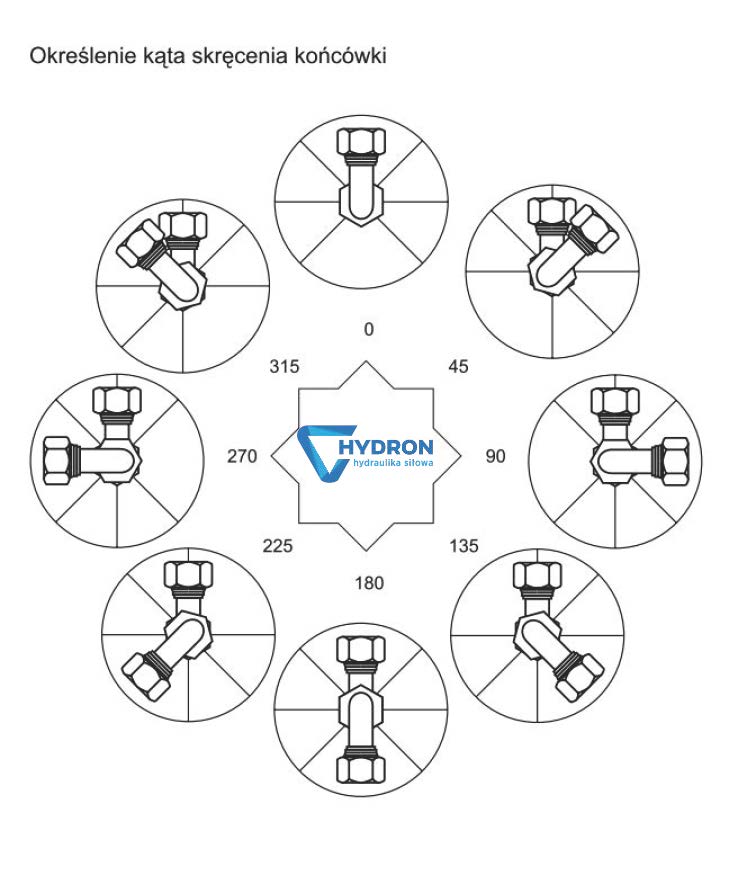
How to determine the hydraulic fitting twist angle ?
The hydraulic fitting twist angle is an important parameter that should be taken into account during the installation of hydraulic hoses. Precise determination of the twist angle is of key importance for the correct operation of the hydraulic system, especially in situations where the hose has fittings set at different angles.
Why is the twist angle important ?
- Correct matching of components: Hydraulic fittings must be precisely positioned relative to each other so that the hose can be safely and tightly installed in the system.
- Preventing stresses: Incorrect positioning of the fittings can lead to excessive hose stress, which increases the risk of damage.
- System operation efficiency: Correct positioning ensures optimal medium flow and minimizes the risk of leaks.
How to measure the hydraulic fitting twist angle?
Measuring the hydraulic fitting twist angle can be carried out in a few simple steps:
-
Hose preparation: Place the hydraulic hose on a flat surface. Make sure the fittings are pointing in the right directions.
-
Using angle templates: Compare the fitting orientation with an appropriate angle template (e.g., hydraulic protractor). Typical setting angles are 45°, 90°, 135° and others, depending on the application.
-
Marking reference points: Mark two reference points on the hose: set one fitting as point “0”, and compare the other to the indicated angle scale.
-
Measurement accuracy: Ensure that the measurement is carried out on a flat surface without any hose stress.
Example applications of different twist angles
- 45°: Most commonly used in hoses with small bending radii.
- 90°: Popular in installations with limited space.
- 180°: Used when the hose must return in the direction opposite to the starting point.
Hydron products adapted to various angles
In the Hydron store, we offer a wide selection of hydraulic fittings with various angles, including:
- 45° angled fittings and 90° for high-pressure hoses.
- Metric, inch, and specialized fittings.
- Hydraulic hose assemblies tailored to individual needs.
Why choose Hydron ?
- Professional service: We will help you in selecting the right fittings and determining the twist angle.
- Wide selection: Over 10,000 products in the field of power hydraulics.
- Quality guarantee: All products meet the requirements of technical standards and have certificates.
If you need help choosing hydraulic fittings or want to order ready-made hoses tailored to your needs, contact our team. We are here to help! Hydron – Your expert in power hydraulics.