









Back to : hydraulic hoses
Hose flow rate vs. its internal diameter
Proper selection of hydraulic hose diameter ensures safety and longevity of the system, while also minimizing the risk of failure and reducing energy losses. To achieve optimal performance, it is worth using the support of experts who will help in selecting the appropriate hydraulic components tailored to the specifics of a given system. Hose flow rate depending on the internal diameter of the hydraulic hose - hydraulic hose capacity
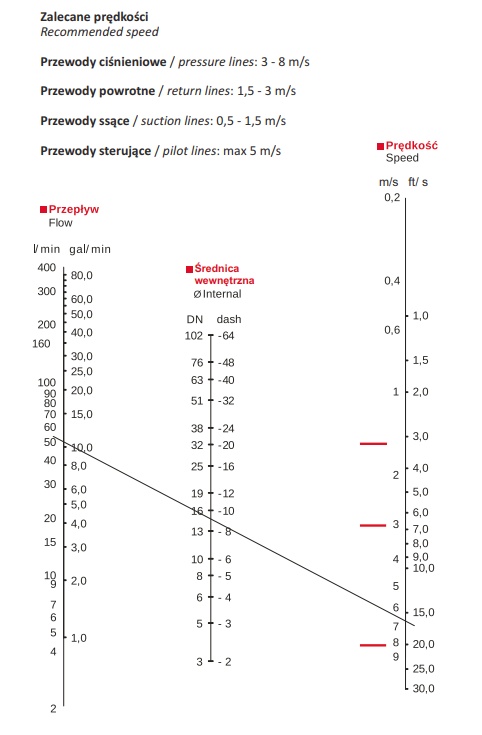
Maximum hose flow rate - hose diameter vs. oil flow
To check the hose flow rate, use a ruler to match the appropriate hose diameter and select the correct speed.
In technical literature regarding hydraulics, the flow rate in hydraulic hoses depends mainly on the internal diameter of the hose and the operating pressure. Here are example flow rates for popular hydraulic hose diameters:
- 6 mm hose (1/4 inch): approx. 15-20 l/min
- 8 mm hose (5/16 inch): approx. 25-30 l/min
- 10 mm hose (3/8 inch): approx. 35-40 l/min
- 12 mm hose (1/2 inch): approx. 45-50 l/min
- 16 mm hose (5/8 inch): approx. 85-100 l/min
Exact values may vary depending on the hose length, type of fluid, and pressure. To obtain detailed data, it is best to refer to the hydraulic hose manufacturer's specifications and relevant standards, e.g., ISO 1219.
Selection of hydraulic hose diameter
Proper selection of hydraulic hose diameter is key to ensuring efficient and safe operation of the hydraulic system. Too small a diameter can lead to increased pressure, which can damage system components and reduce its efficiency. Too large a diameter, on the other hand, can increase costs and reduce flow efficiency.
When selecting the hose diameter, several factors should be taken into account:
-
Flow rate – Selecting the correct hose diameter should be based on the fluid flow in the system. Every hose has its maximum flow capacity, and exceeding it can lead to excessive pressure losses and loads.
-
Operating pressure – The hose must be selected for the operating pressure of the hydraulic system. Too small a diameter at high pressure can lead to excessive loading of the hose, which increases the risk of it bursting.
-
Hose length – The longer the hose, the greater the pressure losses. Therefore, choosing a larger diameter can minimize these losses for long sections.
-
Flow velocity – Fluid flow in the hose should not be too fast, as this can lead to increased turbulence and accelerated hose wear. Selecting the appropriate diameter allows for controlling the flow velocity, which affects the stability and efficiency of the system.