










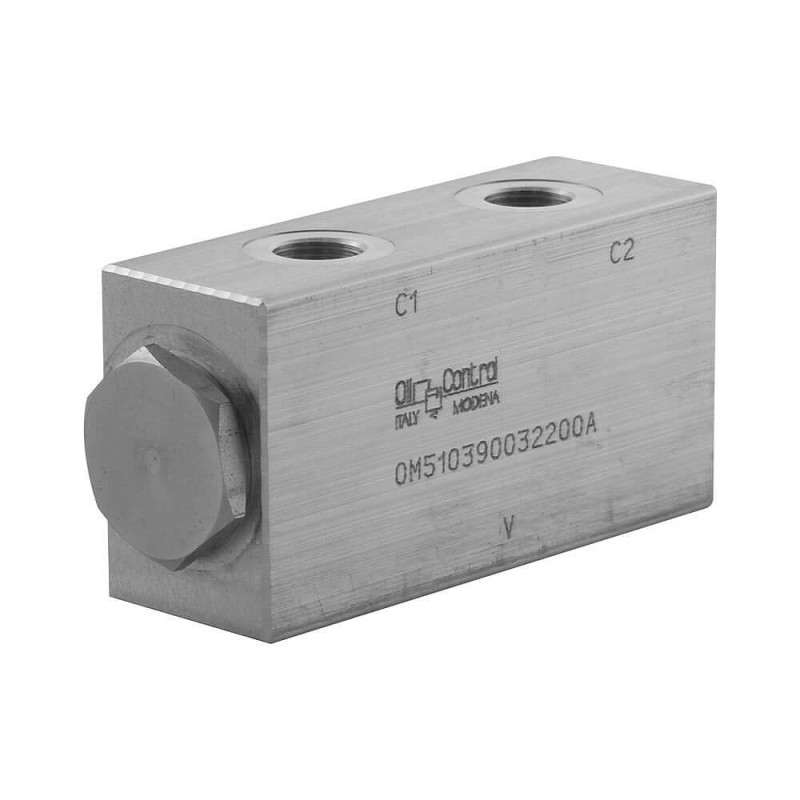
Operating principle of flow dividers in power hydraulics
Flow dividers in power hydraulics are devices that evenly distribute the flow of hydraulic oil into two or more circuits, enabling their synchronous operation. They are crucial in systems where precise and simultaneous control of several hydraulic cylinders or hydraulic motors.
Operating principle:
-
Flow division: A flow divider receives one stream of hydraulic oil from the pump and then divides it into several parallel outputs. Each of these outputs can serve different receivers, e.g., cylinders, which must operate simultaneously.
-
Proportion control: A key function of dividers is to ensure that oil streams are divided proportionally depending on the application needs. For example, if we want two cylinders to move at the same speed, the divider must deliver identical amounts of oil to both cylinders.
-
Uniform pressure: Flow dividers also help maintain uniform pressure in individual branches of the hydraulic system, which is essential for the uniform operation of various hydraulic elements.
Types of dividers:
-
Mechanical flow dividers: Based on gears or cams that divide the flow mechanically. Ideal for precise applications.
-
Hydraulic flow dividers: They use hydraulic valves and control flow based on pressure. They are simpler in construction but less precise than mechanical ones.
Application:
- Synchronization of cylinder operation in industrial machinery.
- Simultaneous operation of several hydraulic circuits in vehicles and working machinery.
- Systems requiring precise control of speed and force at multiple points in the system.
Flow dividers ensure smooth and controlled operation in complex power hydraulic systems, making machines operate more precisely and efficiently.