









back to : hydraulic hose ends
Hydraulic hose fittings
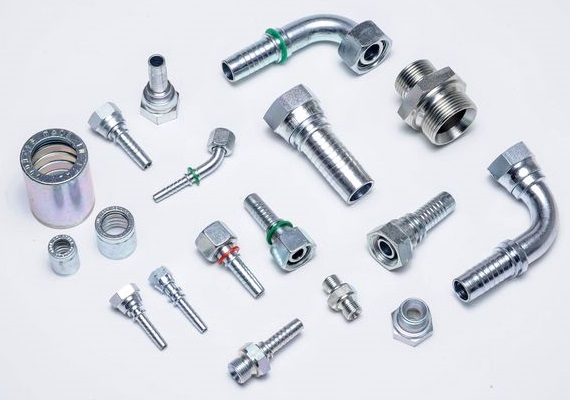
Hydraulic hose fittings is a collection of elements used for crimping hydraulic hoses. Below we present several basic types of fittings used in hydraulic hoses:
-
Hydraulic connectors : Connectors are elements used to connect a hydraulic hose with other system components such as pumps, valves, cylinders, lines, etc. They can have different types of threads, such as metric thread, UNC, UNF, BSPP, NPT, etc. Connectors can be made of metal, such as stainless steel or carbon steel, and have appropriate seals, such as sealing rings, O-rings or flat gaskets.
-
Crimp fittings: Crimp fittings, also known as hose hardware, are used for the permanent crimping of hydraulic hoses. Fittings are elements that we place inside the hose. Ferrules, on the other hand, are placed over the hose and then the entire assembly is crimped on a crimping machine - creating a durable and leak-proof connection between the hose and the fitting.
-
Flexible lines: Flexible lines, also known as flexible hydraulic hoses ( pressure hoses ), are used in places where a flexible connection is necessary to compensate for movements, vibrations or deviations in the system. Flexible lines are usually reinforced with metal braids that provide strength. The more steel braids inside the hose, the higher the working pressure.
-
Hydraulic quick couplers: Quick-release couplings are elements that allow for quick and easy connection and disconnection of a hydraulic hose. They are particularly useful for replacing or servicing parts of the system. Quick couplers are usually equipped with a locking mechanism that keeps the coupling in the closed position.
-
Hydraulic adapters: Adapters, also known as reducers, are used when there is a need to connect different types of connectors or threads. They are used to adapt one size of connector to another to enable compatibility between different system elements.
Remember that the selection of appropriate hydraulic hose fittings depends on the specifications, system requirements and application. It is worth consulting with the manufacturer or a hydraulic specialist to select the appropriate fittings and ensure the correct operation of the hydraulic system.