





back to : hydraulic hoses or technical information
When to replace a hydraulic hose ?
What standards say about the inspection of hydraulic hoses
Regular inspection and replacement of hydraulic hoses are key activities that ensure safe and efficient operation of hydraulic systems. Neglecting these duties can lead to serious failures, leaks, or even threats to the health and life of operators. Visual inspections of flexible hoses. A few words about when flexible hoses should be replaced (according to DIN 20066, point 14.2). Flexible hoses should be replaced when the following criteria are met during a visual inspection. Recommended storage and service life (DIN 20066, point 14.1.2) It is unacceptable to repair a flexible hose using that hose and/or used fittings. Painting flexible hoses should be avoided. Violation of the marking obligation! DGUV rule 113-015 (formerly: BGR 237)
- Hose service life maximum 6 years.
- Damage to the outer layer reaching the reinforcement
- Brittleness of the outer layer due to cracking
- Change in the natural shape of the hose
- Damage or deformation of hose fittings
- Hose pulling out of the fitting
- Reduced strength and impaired function of fittings due to corrosion
- Non-compliance with installation requirements
- Exceeding storage or service life (marking check).
- Leaky spots
Inspection and replacement of hydraulic hoses
Hydraulic hoses play a key role in every hydraulic system, enabling the transmission of working fluids under high pressure. Their proper technical condition has a direct impact on the efficiency, safety, and lifespan of the entire system. Regular inspection and replacement of hydraulic hoses are basic maintenance activities that allow for the avoidance of failures and minimize the risk of costly machine downtime. In this article, we will take a closer look at how to properly carry out these processes and which aspects are particularly important.
Why is hose inspection so important?
Hydraulic hoses are exposed to many factors that can affect their condition over time. High operating pressure, variable temperatures, vibrations, contact with chemicals, or atmospheric conditions are just some of the operational elements that cause gradual wear. Neglecting regular inspections can lead to:
- hydraulic fluid leaks,
- drop in system efficiency,
- damage to other components,
- and in extreme cases – to dangerous failures.
Early detection of problems allows for rapid intervention and replacement of worn components before they lead to more serious consequences.
How to properly inspect hydraulic hoses?
Inspection of hydraulic hoses should be carried out regularly, preferably as part of planned technical machine reviews. Here are the most important steps to perform:
-
Visual assessment: Check the hoses for visible damage such as cracks, bulges, signs of abrasion, or leaks. Pay special attention to bend locations and end connections.
-
Leakage check of connections: Make sure that all ends and connectors are properly tightened and seals are in good condition. Leaks in these locations may indicate problems with the connections.
-
Checking material aging: Hydraulic hoses can lose their flexible properties over time. If you notice signs of aging, such as hardening or loss of flexibility, replacement is necessary.
-
Pressure measurement: It is worth periodically checking working pressure in the hoses, to ensure it is within the standards specified by the manufacturer.
-
Environmental check: Pay attention to the operating conditions of the hoses. The presence of sharp edges, high temperatures, or chemical exposure can accelerate wear.
When should hydraulic hoses be replaced?
The service life of hydraulic hoses depends on the intensity of their use and operating conditions. However, in practice, replacement should be carried out:
- in case of visible damage, such as cracks or leaks,
- when the hose has exceeded the service life recommended by the manufacturer,
- in situations where the hose has lost its properties, such as flexibility or pressure resistance,
- after any mechanical incident that could have affected the integrity of the hose.
It is worth remembering that even small damage to a hose can lead to a serious failure, so preventive action should always be taken.
What hydraulic hoses does Hydron ?
Hydron offers a wide range of hydraulic hoses as well as the hydraulic hoses and hose crimping fittings and hydraulic hose crimping machines which meet the highest quality and safety standards. Each product has appropriate quality certificates, and our team of experts helps select the right hoses and assembly accessories, such as ends or connectors. Our offer includes: hoses for high-pressure applications, hoses with increased abrasion resistance, hoses for aggressive media, flexible hoses and low-temperature resistant ones.
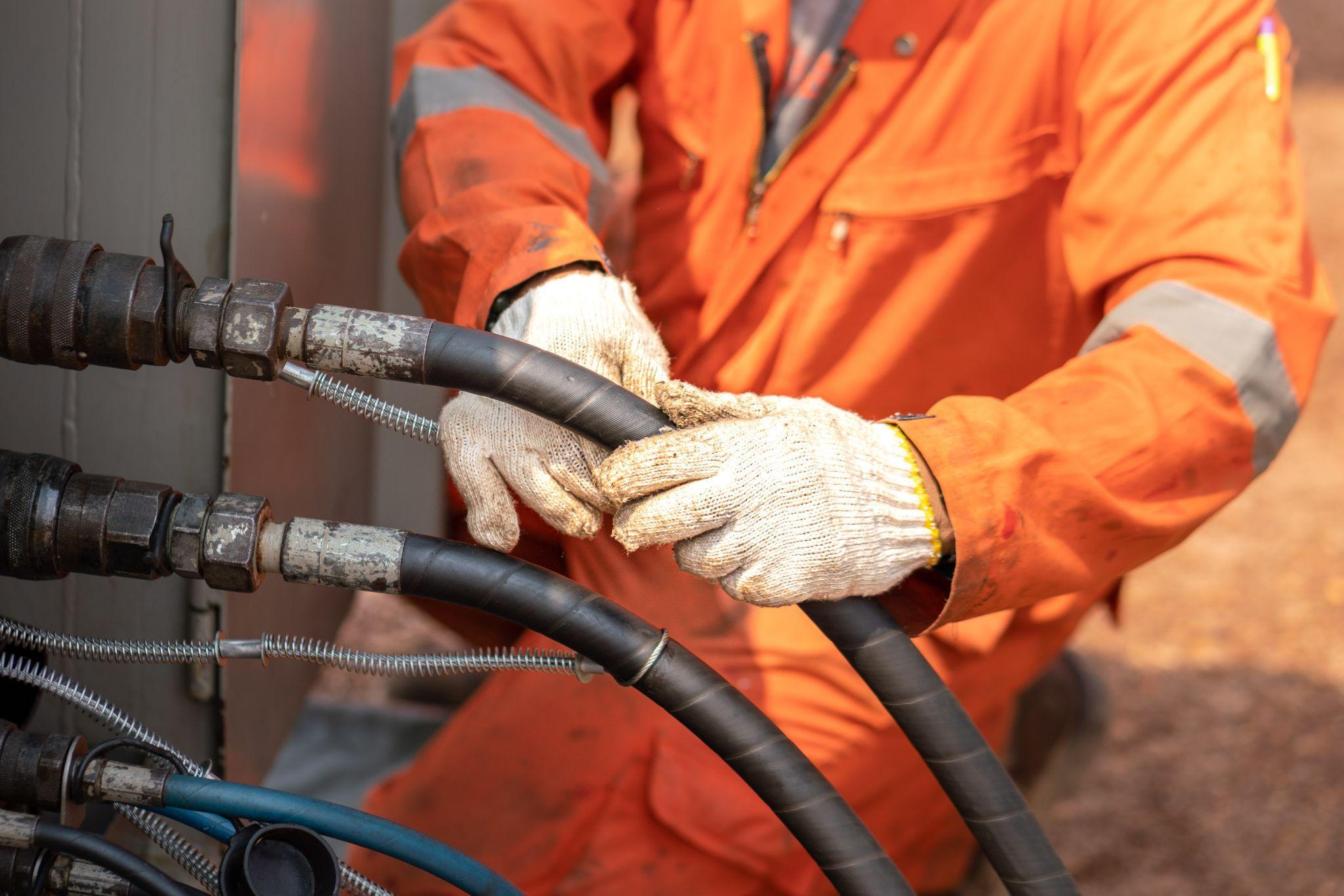
new hoses installed on the machine