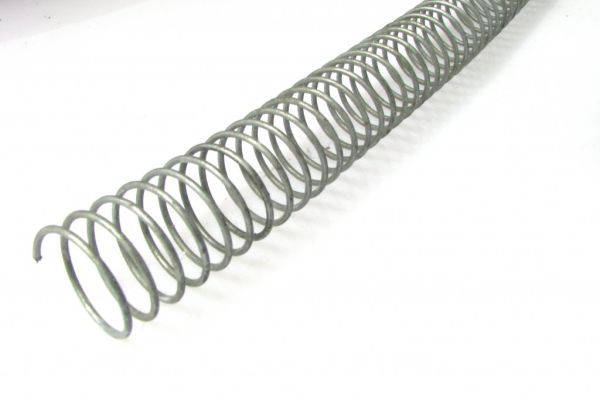
Protective metal spring guard
Produkty z kategorii
Protective springs for hydraulic hoses
Metal protective spring - guards for hydraulic hoses and lines
Selecting the right spring for the hose
Technical parameters of spring guards
- Execution : galvanized steel
- Purpose : protecting the line against damage
Hydraulic hoses are a key element of many hydraulic systems, and their protection is essential to ensure durability, safety, and operational efficiency. Hose protective guards, such as spring guards, play a significant role in protecting hoses against mechanical damage, abrasion, or cuts. In this article, we will provide detailed information about hose protective guards, their types, applications, and the benefits of using them. Hydraulic hose protective guards, such as spring, spiral, and textile guards, are an indispensable element ensuring the durability and safety of hydraulic systems. Choosing the right solution depends on the working conditions and the type of hazards the hose is exposed to. Thanks to a wide range of available products, every user can find a guard tailored to their needs. In our offer, you will find a full range of protective guards for hydraulic hoses
Why use protective guards for hydraulic hoses ?
Hydraulic hoses are exposed to various hazards during operation, such as: Mechanical damage resulting from friction against sharp edges or moving machine parts, extreme environmental conditions, such as high temperatures, chemicals, or UV radiation, risk of cracking due to pressure or excessive bending. Protective guards minimize these hazards, increasing hose durability and reducing the risk of costly failures. It is also worth emphasizing that the use of appropriate guards increases the safety of operators and machines.
Types of hose protective guards
- Spring guards
Spring guards are one of the most popular solutions used in the protection of hydraulic hoses. They are made of high-quality spring steel, which ensures excellent resistance to mechanical damage. Advantages of spring guards: - effective protection against abrasion and cuts, - ease of installation – just put the guard on the hose, possibility of use in a wide temperature range, protection of hoses against excessive bending, which prevents their internal damage.
Made of durable synthetic materials, such as nylon or polyester. These guards are particularly recommended in environments with a high presence of oils or chemicals. Advantages of textile guards: - excellent resistance to oils and chemicals, - protection against UV radiation, - lightweight construction that does not weigh down the hose.
Made of polyethylene or other plastics, spiral guards are flexible and easy to install. Advantages of spiral guards: - possibility of use on hoses of various diameters, - ease of installation even on already mounted hoses, resistance to high temperatures and UV radiation.
How to choose the right protective guard?
Choosing the right protective guard depends on several factors:
- Working environment – If the hoses are exposed to chemicals, choose textile guards. In the case of high temperatures, spring guards will be better.
- Hose type – The diameter and length of the hose determine which type of guard will be the easiest to install.
- Type of hazard – In case of a risk of cuts or mechanical damage, spring guards will be the best choice.
Benefits of using hose protective guards
- Increased hose durability - guards effectively reduce mechanical damage, which extends the lifespan of hydraulic hoses.
- Protection against failures - thanks to guards, the risk of oil leaks or sudden hydraulic system failures is reduced.
- Reduction of service costs - a longer lifespan of hoses means lower expenses for their replacement and repairs of hydraulic systems.
- Raising the safety level - securing the hoses eliminates the risk of operator contact with hot or damaged elements.
How to install spring guards?
Installation of spring guards is simple and can be done by yourself using the following steps:
- Measure the length of the hose to fit the appropriate length of the guard.
- Put the guard on the hose, starting from one of its ends.
- Make sure the guard adheres to the hose along its entire length.
- Secure the ends of the guard with cable ties to prevent it from slipping.
Metal spiral guards
Metal spiral guards are professional protective elements designed to secure hydraulic hoses, pneumatic hoses, and rubber lines against mechanical damage, abrasion, high temperatures, and environmental factors. Thanks to their spiral design and durable material, they effectively protect hoses against abrasion, crushing, and accidental bending during machine operation. This is a solution that works wherever safety and durability are crucial — from hydraulic crimping facilities, through service workshops, to heavy industrial and construction machinery. What is a metal spiral guard and how is it built ? A metal spiral guard is a flexible, spirally wound tape made of high-quality galvanized or stainless steel, creating a compact protective structure around the line. Its construction is based on spiral winding, which allows for: easy adjustment to the shape and diameter of the hose, maintaining the flexibility and mobility of the lines, effective protection against impacts, abrasion, and twisting. Thanks to the metal construction, the guard not only protects but also stiffens the line, which facilitates its routing and organizing in the workspace.
Why use metal spiral guards ?
In many industrial and hydraulic installations, lines are exposed to harsh conditions – contact with sharp edges, oils, high temperatures, or strong vibrations. The use of a metal spiral guard allows you to significantly extend the lifespan of the lines and reduce the risk of failure. The most important advantages are: resistance to abrasion and wear, protection against crushing and bending of hoses, resistance to corrosion and weather conditions, possibility of use in a wide temperature range, aesthetic and orderly installation of lines. Thanks to these features, spiral guards are not only protection but also an element that improves organization and work safety.
Application of metal spiral guards in practice
Metal spiral guards are widely used in many technical industries. They stand out with exceptional durability and versatility, which is why they are used in:
-
power hydraulics – protection of high-pressure lines in crimping facilities and machines,
-
pneumatics – securing air and pneumatic lines,
-
heavy and machinery industry – protection of cables, pipes, and hoses against damage in machines,
-
automotive industry – securing lines in heavy-duty, construction, and agricultural vehicles,
-
energy and petrochemicals – protection of lines against temperature and aggressive media,
-
production and assembly of industrial installations, where high safety standards are required.
Types of available metal spiral guards
The Hydron offer includes various versions of spiral guards, tailored to working conditions and the type of installation.
1. Galvanized steel spiral guards
This is the most universal solution – made of durable carbon steel with a galvanized coating, resistant to corrosion and abrasion. They are perfect for workshop, agricultural, and industrial applications where there are frequent movements of lines or contact with metal elements. Spiral guards with increased thickness : Models with a reinforced structure and a denser coil, dedicated to protecting lines in places exposed to very high mechanical loads. Ideal for construction machinery, hydraulic presses, and mining equipment.
2. Stainless steel spiral guards
Made of acid-resistant stainless steel (AISI 304 or 316), designed to work in the most demanding environments – including the food, marine, and chemical industries. They provide the highest level of resistance to corrosion, temperature, and aggressive substances.
How to choose the right metal spiral guard for a hose ?
Choosing the right guard depends on several important factors: Hose outer diameter – the guard should adhere tightly to the line, but allow it to bend freely. Working environment – in places with high humidity or an aggressive chemical environment, stainless steel guards will work best. Level of mechanical load – the greater the risk of impacts or abrasion, the thicker and denser the spiral should be. Working temperature – steel guards withstand up to +260°C, making them an ideal solution in industrial applications. Hydron experts will help you choose the ideal spiral guard model tailored to the specifics of your installation and working conditions.
Springs by the meter - spring guards sold by the meter
Order any length tailored to your needs. Spring guards are flexible protective elements used mainly to protect hydraulic, pneumatic, and technical hoses against mechanical damage. Their task is to prevent abrasion, kinking, and cracking in places particularly exposed to bending, contact with sharp edges, or high temperatures. The Hydron offer includes spring guards sold by the meter, which means that the customer can order exactly the length they need – without having to purchase entire rolls or fixed lengths. This is a flexible and economical solution, ideal for services, workshops, and production companies.
expand text Anti-kink spring
What is an anti-kink spring
An anti-kink spring is a specialized protective element used with hydraulic hoses and pneumatic hoses, whose main task is to prevent excessive bending or twisting of the line. Such a spring creates a metal or steel spiral guard around the hose, which keeps the line in the correct alignment, minimizing the risk of damage, abrasion, cracking, or deformation. It is usually mounted on the section where the hose is subject to frequent movements, vibrations, or exposure to mechanical overload.
Characteristic features of an anti-kink spring
The anti-kink spring is made of high-quality spring steel or stainless steel, which ensures high resistance to corrosion, abrasion, and external conditions. The scope of the spring's operation includes, among others: protection against line breakage at the mounting point, limitation of the bending angle below the permissible value, and maintaining the patency of the l
Gallery: