










Hydraulic cylinder seals
Produkty z kategorii
Hydraulic cylinder seals
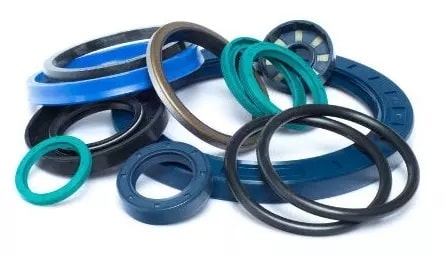
We offer seals for hydraulic cylinders. In the following category, you will find elements for sealing hydraulic cylinder pistons. The offer includes cylinder components (sealing), including piston seals (rod seals), complete sealing packages, cylinder seal repair kits. Seals called "manszety" (cups) are elements found in every cylinder. They seal the oil flow (ensuring that the oil force is used for the rod movement). Damage to the seals causes oil leakage and prevents the cylinder from working correctly, making it lack the required pushing and pulling force.
We encourage you to explore our entire offer, including pneumatic fittings, such as push-in tekalan tees, or reducing tees.
Basic functions of cylinder seals
Seals perform three key functions. First, prevent leakage of hydraulic fluids and gases, which is essential for maintaining pressure inside the devices. Second, they protect against external contaminants, extending equipment life and minimizing the risk of failure. Third, reduce friction between moving elements, which reduces energy consumption and extends service life. These functions are crucial for the efficiency and longevity of cylinders.
Materials used in seals
Materials used for the production of cylinder seals must meet specific requirements to ensure durability and efficiency. The most popular seals are rubber and plastic ones. The choice of material depends on the technical specifications of the cylinder, such as piston diameter or stroke length, and operating conditions, such as temperature or pressure. Rubber seals are flexible and wear-resistant, making them ideal for low temperatures. On the other hand, polyurethane seals are characterized by high resistance to oils and mechanical strength, making them suitable for difficult conditions.
Maintenance of cylinder seals
Maintenance of these components in cylinders is essential for their proper functioning. Regular inspection, maintenance, and replacement ensure optimal performance and long-term use. Neglecting these activities can lead to failure and costly repairs, emphasizing the importance of systematic servicing.
Cylinder seal kit
What is a hydraulic cylinder seal kit ? A hydraulic cylinder seal kit is a complete set of sealing elements that protect the interior of the cylinder from hydraulic fluid leaks and contaminants entering the system. Its main function is to ensure tightness and proper operation of the cylinder, which translates into its durability, efficiency, and reliability. Seals in a cylinder must withstand high pressures, variable temperatures, and intensive use. Therefore, they are made of high-quality materials such as NBR rubber, polyurethane (PU), PTFE (Teflon), or special elastomers resistant to hydraulic oils.
What does a cylinder seal kit consist of?
A hydraulic cylinder seal kit consists of several key elements that together ensure its tightness and proper functioning:
- Piston seals – prevent hydraulic fluid leaks between the cylinder chambers. They are made of pressure-and wear-resistant materials.
- Rod seals – protect the cylinder from oil leaking out and prevent contaminants from entering the cylinder interior.
- Guide rings – stabilize the movement of the piston and rod, preventing their lateral displacement, which extends the life of the seals.
- Wiper rings – remove dirt, dust, and moisture from the rod as it retracts into the cylinder, protecting the entire system from contamination.
- O-rings – additional seals used in various parts of the cylinder to ensure full tightness of connections and compensate for minor surface irregularities.
- Spacer rings – elements separating the seals and increasing their effectiveness.
Piston seals
Piston seals are elements used in hydraulic cylinders whose main task is to separate the two working chambers of the cylinder and ensure their complete tightness. Thanks to them, the hydraulic medium does not pass between the chambers, allowing the piston to work smoothly, without pressure loss or a drop in system efficiency. Piston seals must be characterized by high resistance to pressure and friction to operate in difficult conditions. They are made of materials resistant to wear, aging, and variable temperatures, ensuring their long life. It is also important that their design is compact and allows easy installation in piston grooves. This type of seal is used in all types of hydraulic cylinders, from simple workshop systems to heavy industrial or construction machinery. Proper selection of the piston seal guarantees efficient and safe operation of the entire hydraulic system.
Hydraulic cylinder piston seal
The hydraulic cylinder piston seal is an extremely important element that determines the tightness, efficiency, and service life of the entire hydraulic system. Its main task is to separate the working chambers of the cylinder – piston and return – so that oil pressure can be maintained on both sides of the piston without energy loss or leaks. This allows the cylinder to fully utilize its power and respond precisely to control movements. Piston seals operate under conditions of high pressure and variable temperatures, so they must be made of materials with high resistance to abrasion, deformation, and hydraulic oil. Polyurethane (PU), NBR rubber, or composite materials are most commonly used, as they maintain flexibility and tightness even during intensive operation. In some cases, PTFE (Teflon) seals are also used, providing very low friction and high chemical resistance.
Depending on the cylinder design, different types of piston seals are used – U-rings, V-rings, compact piston sets, as well as symmetrical seals that can work in both oil flow directions. Combined with guide rings and backup rings, they create a complete sealing system that stabilizes the piston in the cylinder and protects it from wear. A well-selected piston seal minimizes so-called "internal leaks," allowing the system to maintain full working force and precision of operation. Improper selection or wear of seals can lead to pressure loss, leaks, and increased wear of metal components in the cylinder. The offer includes hydraulic cylinder seals in many variants, adapted to different dimensions and operating parameters. Each product meets industry requirements and is characterized by high wear resistance and dimensional stability even under heavy loads.
TTI seal
The TTI seal is a high-quality element designed for use in hydraulic cylinders, mainly used as a rod gland seal. Its task is to ensure full tightness between the moving rod and the stationary part of the cylinder, thereby preventing hydraulic oil leaks and pressure loss in the system. This type of seal is among the most frequently used in power hydraulics, combining durability, wear resistance, and high performance effectiveness.
Construction and operation of the TTI seal
The TTI seal is characterized by an asymmetrical construction – it has two sealing lips with different profiles. The outer lip is responsible for maintaining static tightness between the seat and the rod, while the inner lip ensures dynamic tightness, i.e., during the movement of the rod. This design allows the TTI seal to adapt perfectly to operating conditions and eliminates the risk of leaks even under heavy loads. Polyurethane (PU) or a material with similar properties is used for production, providing high resistance to abrasion, hydraulic oils, and temperature. These seals are resistant to deformation and maintain flexibility over a wide range of temperatures – typically from about –35°C to +100°C, what makes them a universal solution for most industrial applications. Depending on the version, you can find:
-
TTI – basic variant of the gland seal, used in standard operating conditions,
-
TTI/L – version with an additional internal lip, providing better sealing in more difficult conditions,
-
TTI/AI – model equipped with an anti-extrusion ring, resistant to very high pressures and protecting the seal from being pushed out of the groove.
Application of TTI seals
TTI-type seals are widely used in hydraulic cylinders and pneumatic cylinders operating in demanding environmental conditions. They are used wherever it is necessary to maintain high system tightness while ensuring smooth rod movement.
Typical applications include among others:
-
agricultural machinery, e.g., front loaders, presses, spreaders, and hydraulic lifts,
-
construction machinery, such as excavators, loaders, and cranes,
-
industrial machinery – hydraulic presses, assembly devices, cylinders in production lines,
-
specialized and municipal vehicles where cylinders exposed to dust, mud, and variable temperatures operate.
Thanks to its construction, the TTI seal is excellent for both mobile and stationary applications. It protects the cylinder from external contaminants entering and pressure loss from within the system.
Advantages of TTI-type seals
-
High resistance to wear and abrasion,
-
Effective sealing at high operating pressures (up to 400 bar),
-
Stable operation over a wide temperature range,
-
Resistance to hydraulic oils, greases, and technical fluids,
-
Easy installation and long service life,
-
Possibility of matching the version (TTI, TTI/L, TTI/AI) to operating conditions.
These properties make TTI seals among the most reliable and universal solutions in the field of power hydraulics. They ensure the smooth operation of the entire system and minimize the risk of failures related to oil leakage.