Pressure hose repair
Produkty z kategorii
Pressure hose repair
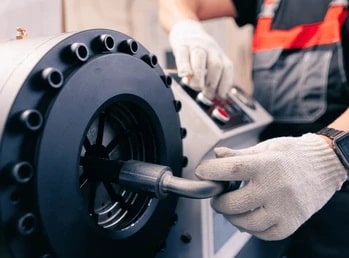
What is pressure hose repair ? Pressure hose repair is the process of restoring the efficiency of hydraulic lines or pneumatic lines, which were damaged as a result of operation, wear or improper use. These hoses often work under very high pressure, therefore any leak or damage is a potential threat to machines and the operator. Professional repair allows for restoring the system's tightness, ensuring full functionality of the line, without the necessity of replacing the entire set. In practice, repair most often consists of replacing hose ends or re- crimping the hose, i.e., installing new connectors and clamping sleeves using a hydraulic hose crimper. In many cases, it is enough to cut off the damaged fragment of the hose and re-crimp it, using an appropriate set of sleeves and ends consistent with the operating parameters of the given line.
Most common causes of pressure hose damage
- Mechanical wear and abrasions – Hydraulic hoses often work in difficult conditions – they rub against metal machine parts or are exposed to bending in one place. As a result, the outer rubber layer is abraded and the steel braid is exposed.
- Damage to ends (connectors) – A common problem is oil leakage at the connection of the end with the hose. This can be caused by loosening of the crimp, thread contamination or micro-cracks in the sleeve.
- Leak along the hose length – Air bubbles, leaks or micro-cracks in the rubber wall are signs of material aging or working at too high a temperature.
- Operating pressure too high – Exceeding the permissible pressure can lead to delamination of the braid or bursting of the hose.
- Breaking or kinking of the line – In places where the hose is repeatedly bent at a sharp angle, the inner layer may deform, causing flow restriction and damage.
- Improper selection of hose or end – Using the wrong type of end (e.g., different thread or wrong angle) leads to leaks or rapid wear of the crimp.
How the pressure hose repair process works
How the pressure hose repair process works
-
Damage diagnosis – Determining whether the damage concerns the end, the crimp, or the hose itself.
-
Disassembly of the damaged section – Cutting off the defective part of the hose and removing old sleeves and ends.
-
Selection of appropriate elements – Based on the parameters of the original line (diameter, braid type, pressure, thread type), new connecting elements are selected, e.g., DKOL / DKOS metric ends, BSP / JIC inch ends or fuel ends.
-
Crimping a new connector – This process is performed using a professional hydraulic crimper, e.g., the SAMWAY brand, available in the Hydron offer. Crimping is performed with precise selection of the sleeve diameter to ensure full tightness.
-
Quality control and line tightness test – The finished line is tested under pressure to confirm the absence of leaks and correct crimping.
Can every hose be repaired ?
Not always. Hoses that are significantly worn, cracked along their entire length, deformed or internally contaminated often only qualify for replacement. Also, lines with special pressure requirements (e.g., hoses above 700 bar) should be repaired only by specialized workshops, while maintaining safety standards and certification.
Why it is worth entrusting the repair to Hydron
Repairing a pressure hose makes sense when the damage is local – e.g., it concerns one end or a small section of the line. In the case of significant cracks, destruction of the braid or aging of the rubber, a better solution is to replace the hose with a new one. In both cases, it is worth using the services or products of a reputable supplier, such as Hydron, which provides not only the highest quality components but also full technical support and a guarantee of safe use.
Hydron, with over 15 years of experience in the power hydraulics industry, offers comprehensive support in the field of regeneration and crimping of hydraulic hoses. We have modern SAMWAY crimpers, a wide range of ends, sleeves and hydraulic connectors, and we also offer professional technical advice. In our shop you will find all the necessary elements for line repair – from hydraulic ends to crimping sleeves and hose crimpers.
Gallery