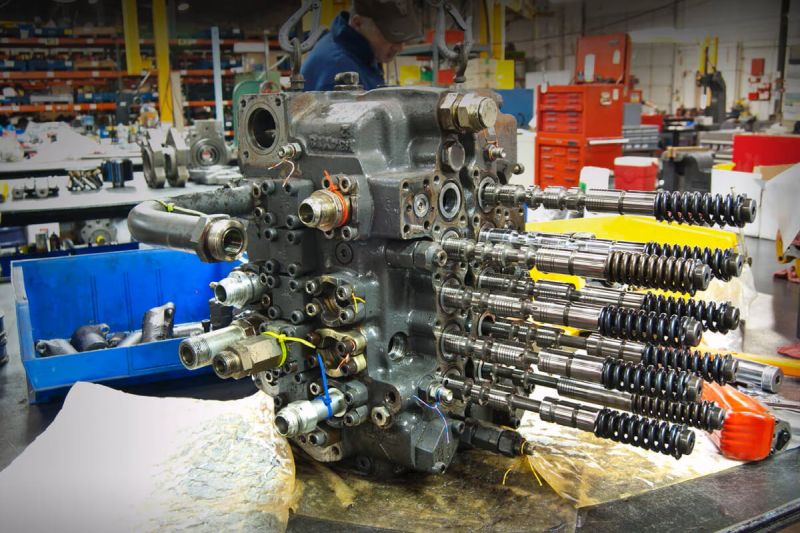
Hydraulic directional control valve service
Produkty z kategorii
Service and repair of hydraulic directional control valves
A hydraulic directional control valve is one of the most important components of the power hydraulics system. Its task is to control the flow direction of hydraulic oil and distribute the working medium stream to the appropriate system components, such as hydraulic cylinders, hydraulic motors, or other energy receivers. A properly functioning valve ensures precise machine control, stable operation of the entire hydraulic system, and the safety of equipment operation. During machine operation, hydraulic directional control valves work in difficult conditions. They are exposed to high operating pressure, heavy mechanical loads, and the effects of contaminants found in the hydraulic oil. Over time, this can lead to wear of internal components, loss of tightness, or deterioration of operating parameters. In such situations, it is necessary to perform a professional hydraulic valve service.
What does hydraulic directional control valve service involve
Hydraulic directional control valve service consists of comprehensive diagnostics, disassembly, repair, and restoration of the correct operating parameters of the device. The goal of such action is to restore the full technical efficiency of the valve and ensure its safe operation in the installation of power hydraulics. The service process begins with an analysis of failure symptoms. Users most often report problems such as a drop in system pressure, uneven cylinder operation, lack of response to control, or appearing hydraulic oil leaks. Based on these symptoms, it is possible to initially determine the cause of the valve damage. After the initial diagnosis, the hydraulic valve is dismantled from the machine and subjected to a detailed technical analysis. Then the device is disassembled into individual structural elements, which can be thoroughly checked.
Hydraulic directional control valve diagnostics
Diagnostics is one of the most important stages of hydraulic valve service. It allows determining the actual technical condition of the device and the scope of work necessary to restore its efficiency. During diagnostics, the condition of the control spools, the valve body, return springs, relief valves, and all sealing elements is checked. The working surface of cooperating elements is also inspected, as even slight wear can cause leaks or incorrect control of the hydraulic oil flow. An essential element of diagnostics is also the inspection of seals and O-ringtype rings. Damaged or worn seals are very often the cause of hydraulic oil leaks and pressure drops in the system.
Cleaning of valve components
After disassembly, all elements of the hydraulic valve are thoroughly cleaned. Oil deposits, contaminants, and small metal filings that could have entered the hydraulic system are removed. The cleaning process is of great importance for the further operation of the valve, as even small contaminants can cause spool sticking or disturbances in the operation of control valves. After cleaning, each element is thoroughly checked for wear, mechanical damage, and potential deformations.
Repair and regeneration of hydraulic directional control valves
The next stage of the service is the actual repair or regeneration of the hydraulic valve. The scope of work depends on the degree of wear of individual components. The most commonly performed activities include replacing seals, O-rings, and guide rings. In the case of greater wear, valve springs, control elements, and valve spools are also replaced. In some situations, regeneration of the working surfaces of the body or guiding elements is necessary. This process allows for restoring appropriate tolerances and ensuring the correct cooperation of all valve parts. Thanks to regeneration, it is possible to restore the operating parameters of the valve close to factory parameters, which significantly extends its further service life.
Assembly and adjustment of the hydraulic directional control valve
After completing the repair work, the reassembly of the hydraulic valvetakes place. All components are assembled in accordance with technical requirements and while maintaining appropriate assembly tolerances. During assembly, special attention is paid to the correct positioning of the control spools, checking the operation of return springs, and the tightness of all connections. In some cases, adjustment of safety valves or relief valves located in the valve is also performed.
Testing the valve after repair
The final stage of service is checking the operation of the repaired hydraulic valve. The component is subjected to tests that confirm the correct operation of all sections and the tightness of the system. During tests, parameters such as operating pressure, smoothness of spool operation, and the valve's response to control are monitored. Only after passing the tests successfully can the valve be reinstalled in the machine.
When is hydraulic directional control valve service necessary
Hydraulic valve service is necessary in the event of symptoms indicating its wear or damage. The most common symptoms include hydraulic oil leaks, a drop in cylinder force, uneven machine operation, or lack of response to control. A worrying signal can also be sticking control levers, spontaneous dropping of machine elements, or excessive heating of the hydraulic oil in the system. In such situations, fast diagnosis and professional repair of the hydraulic valve allow avoiding more serious failures and costly machine downtime. Regular inspection and maintenance of hydraulic valves significantly extend their service life and ensure stable and safe operation of the entire power hydraulics system.