










Dual pilot-operated check valves for welding
Produkty z kategorii
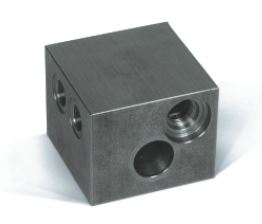
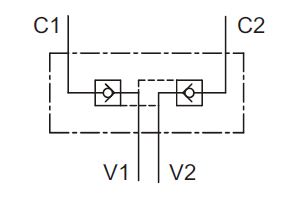
VBAS dual pilot-operated check valves – version for welding
VBAS dual pilot-operated check valves, designed for installation by welding, are a specialized solution dedicated to hydraulic systems where the highest tightness and durability of the connection are required. Unlike threaded versions, welding variants eliminate the risk of leaks on threaded seals, creating a single, monolithic structure with the hydraulic system. This is an engineering solution preferred in heavy industrial machinery, where intense vibrations and variable dynamic loads occur. VBAS valves serve a protective function, blocking the movement of the cylinder in both directions until activated by a control signal, which is essential for ensuring the safety of technological processes and protecting operators.
|
CODE CODE |
THREAD PORT SIZE |
MAX FLOW MAX FLOW |
MAX PRESSURE MAX PRESSURE |
|
VBAS 70 |
G 3/ 8” |
25 |
350 |
|
VBAS 80 |
G 3/ 8” |
25 |
350 |
|
VBAS 90 |
G 3/ 8” |
25 |
350 |
Technical characteristics and installation
The construction of VBAS valves is based on steel bodies with high weldability, which allows for secure connection with hydraulic pipelines while maintaining full material strength. These devices are adapted to work under high operating pressure, offering reliability in the most demanding applications. The use of VBAS valves requires precise preparation of tube ends and appropriate welding techniques, which guarantees full tightness of the installation. Due to the permanent nature of the connection, these components are an ideal choice for system modernizations where eliminating the risk of connection loosening is key. To maintain a long service life of the valve seats, the system should be equipped with professional hydraulic filters, which remove solid contaminants that can negatively affect the operation of internal components.
Advantages of VBAS valves for welding
- High connection integrity: Welded connections guarantee no leaks at installation points, which is particularly important in high-pressure systems.
- Resistance to material fatigue: The threadless design eliminates mounting notches, which translates into better resistance to vibrations and hydraulic shocks.
- Flow optimization: Precisely designed internal channels ensure low resistance for the flowing medium, which promotes efficient operation of systems powered by hydraulic directional control valves with various performance parameters.
| Technical parameter | Value / Standard |
|---|---|
| Maximum pressure | 350 bar |
| Mounting method | Welding (butt welding) |
| Temperature range | -20°C to +80°C |
| Application | High-pressure installations |
Frequently Asked Questions (FAQ)
Why choose the welding version instead of the threaded one?
The main advantage is durability and tightness. Welded connections are resistant to loosening under the influence of vibrations, making them ideal for mobile and industrial machinery in heavy operating conditions.
Does the installation of VBAS valves require specialized qualifications?
Yes, due to working under high pressure, the welding of these elements should be performed by qualified personnel according to appropriate technological procedures for hydraulic lines and pipelines.
Can the valve be disassembled after welding?
Due to the permanent nature of the connection, disassembly requires cutting the valve out of the system. Therefore, VBAS is used where frequent changes in the installation configuration are not expected.