










Plate-mounted double pilot operated check valves
Produkty z kategorii
Plate-mounted double pilot operated check valves – hydraulic locks
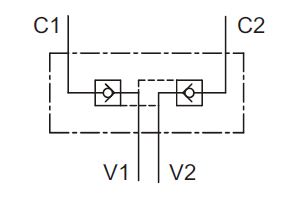
Hydraulically operated double check valves, known in technical terms as hydraulic locks, constitute the technical foundation of safety in power hydraulic systems. Their main task is to completely, mechanically block the movement of the cylinder in both directions at rest, which eliminates the phenomenon of uncontrolled load falling or the shifting of working elements. These devices require an external control signal to allow the flow of the working medium, which acts as a safeguard against the consequences of a sudden loss of pressure in the system. Thanks to the advanced internal construction, the offered components guarantee the maintenance of high pressure in the cylinder chambers for a long time, ensuring the stability of the working position even during long-term machine downtime.
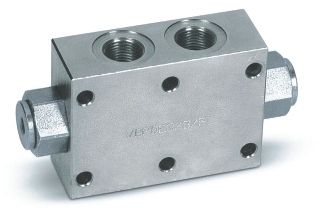
VBPDE FL plate-mounted double pilot operated check valves
The VBPDE FL model is a standard plate solution designed for direct mounting in hydraulic systems where high tightness is required when blocking the flow. These valves are characterized by a compact design, which facilitates integration with hydraulic directional control valves or directly in the machine's control block. Thanks to the use of hardened closing elements, VBPDE FL valves provide a long service life and resistance to cyclic dynamic loads. They are an ideal solution wherever it is crucial to ensure the operational safety of double-acting cylinders under high operating pressure conditions.
|
KOD CODE |
GWINT PORT SIZE |
MAX PRZEP£YW MAX FLOW |
MAX CIŒNIENIE MAX PRESSURE |
|
VBPDE 3/ 8” FL |
G 3/ 8” |
35 |
350 |
|
VBPDE 1/ 2” FL |
G 1/ 2” |
50 |
350 |
VBPDE FLV bolt-on plate-mounted double pilot operated check valves
The VBPDE FLV variant is an evolution of the plate design, enriched with a dedicated mounting system using through-bolts. This solution allows for very fast mounting directly on the cylinder body or at precisely defined points of the hydraulic block, which minimizes the number of required pipe connections. Thanks to the rigid bolt mounting, these valves perfectly withstand vibrations and hydraulic shocks occurring during the operation of construction or agricultural machinery. It is an engineering solution dedicated to systems where maximum system compactness and ease of servicing using basic hydraulic fittings.
|
KOD CODE |
GWINT PORT SIZE |
MAX PRZEP£YW MAX FLOW |
MAX CIŒNIENIE MAX PRESSURE |
|
VBPDE 1/ 4” FLV |
G 1/ 4” |
20 |
350 |
|
VBPDE 3/ 8” FLV |
G 3/ 8” |
35 |
350 |
Why choose our components?
- High material quality: Bodies made of high-strength steel or ductile iron guarantee resistance to nominal pressures up to 350 bar.
- Operational safety: A precise pilot ratio ensures smooth valve opening, which eliminates vibrations and unwanted pressure spikes.
- Compatibility: The valves have been optimized to work with mineral oil-based working media according to the DIN 51524 standard.
| Technical parameter | VBPDE FL / FLV |
|---|---|
| Maximum working pressure | 350 bar |
| Operating temperature range | -20°C to +80°C |
| Recommended filtration | 25 µm |
| Mounting type | Plate-mounted / Plate-mounted (bolt-on) |
Frequently Asked Questions (FAQ)
Can VBPDE FL and FLV valves be used interchangeably?
The choice between these models depends on the available mounting space and the method of connection. The FLV version with bolt mounting is preferred in places where higher vibration resistance and direct installation of the valve on the cylinder are required.
What are the requirements for oil cleanliness?
To ensure long-term tightness of the valve seats, we recommend maintaining an oil filtration level of at least 25 µm, which prevents the deposition of mechanical impurities on the closing elements.
Do these valves require special bleeding?
When starting the system for the first time, it is recommended to slowly increase the pressure to remove air from the control chambers. The valve design allows for self-bleeding during the standard duty cycle of the system.