









AB 90° JIC (UNF) Elbows
Products in this category
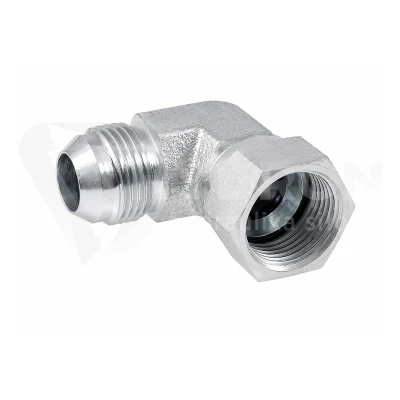
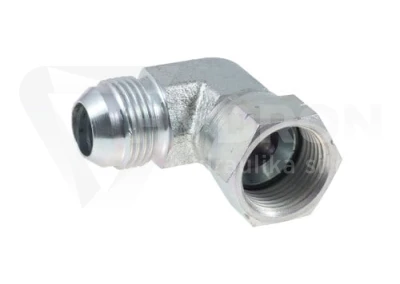
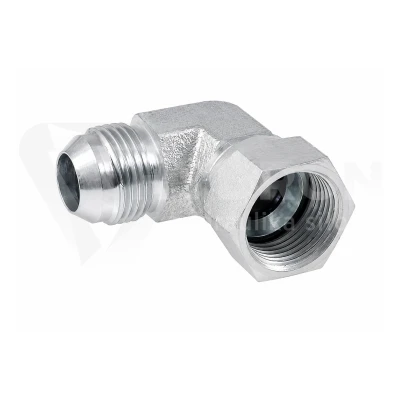
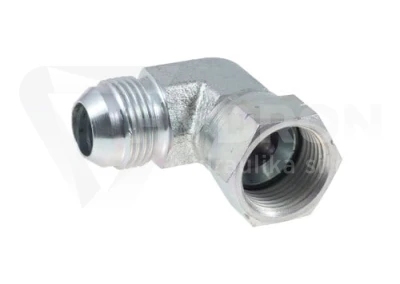
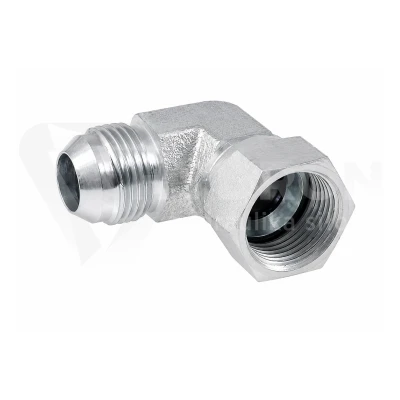
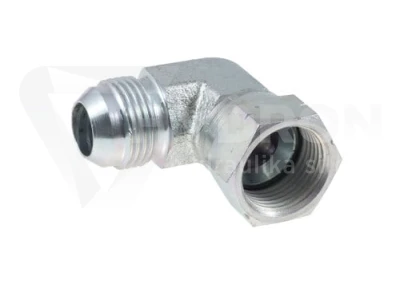
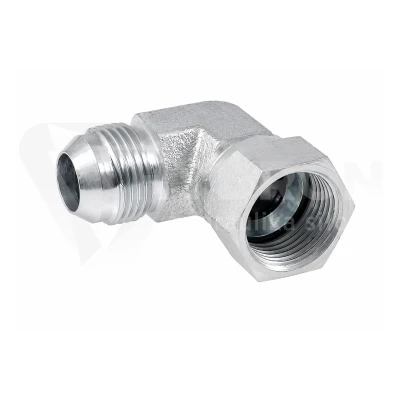
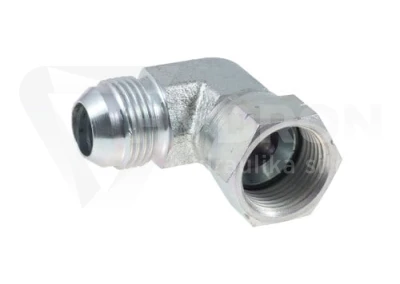

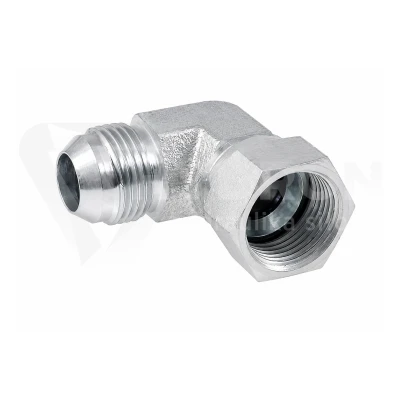
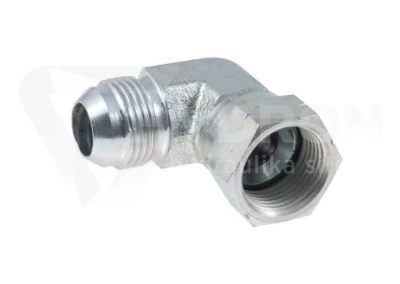
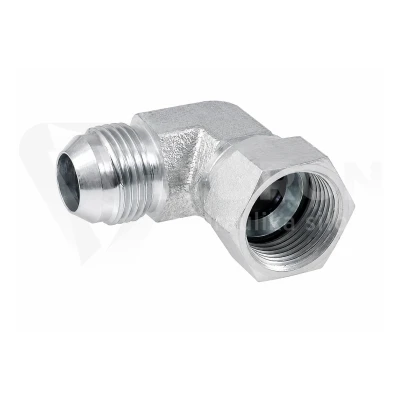
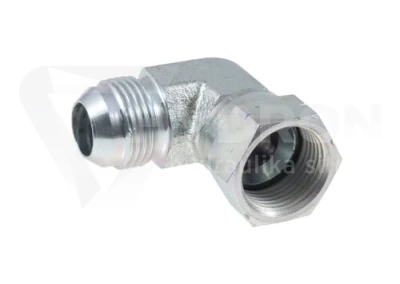
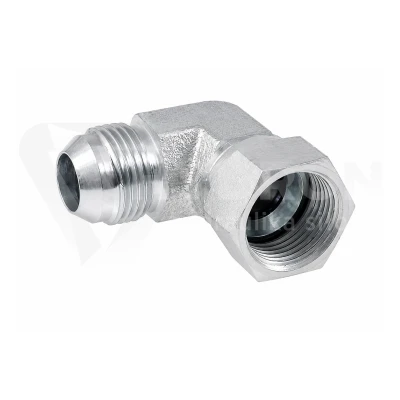
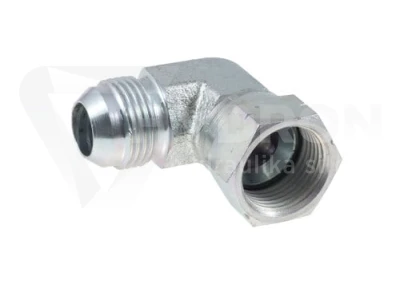
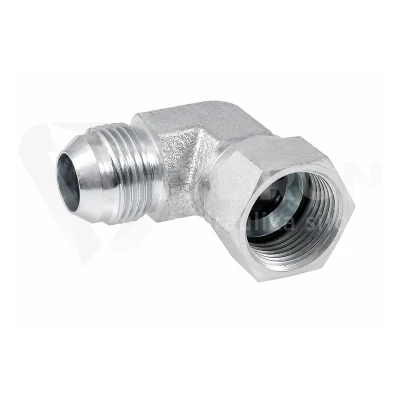
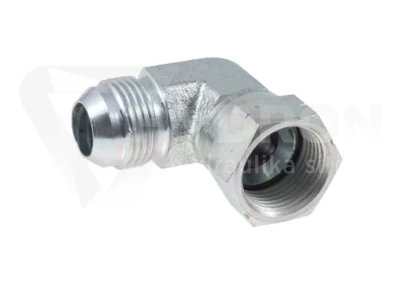
AB 90° elbows with JIC, UNF threads
AB 90 female swivel elbow fittings° with JIC threads ( American ) 90 elbow fittings° are also called adjustable fittings because they can be screwed on with a swivel nut and positioned in the desired direction. An AB elbow has a swivel nut (A) on one side and a male thread (B) on the other. The concave cone in the nut ( identical to that in the case of DKJ fitting) on the other side, from the male thread side, a convex cone ( identical to that in the case of AGJ fitting ) Construction: zinc-plated free-cutting steel. AB JIC elbow fittings are most commonly found and used in all kinds of forestry machinery and equipment ( logging equipment and machinery ) Fittings also found in Western agricultural and construction equipment. AB elbows are used to connect hydraulic system hoses. Alternative designation: Female elbow fitting body, Adjustable elbow with swivel nut, Angle connector Type: St. 09
AB JIC UNF elbows for power hydraulics
AB JIC UNF elbows are hydraulic fittings designed to change the direction of the installation and connect appropriately selected elements in the JIC standard. They use UNF threads and a characteristic seal on a 37° cone, making them suitable for use in many power hydraulic systems, mobile hydraulics, and industrial machinery.
The AB construction indicates a combination of two different types of ends: a side with a nut and a side with a male thread. This arrangement allows for connecting system elements with appropriately selected ports without using an additional adapter. When choosing, you should verify both the UNF thread size and the configuration of both sides of the fitting.
JIC UNF elbows with 37° cone
The JIC standard utilizes conical surfaces made at a 37° angle. These are responsible for sealing the connection after the mating elements are correctly tightened. The UNF thread handles the mechanical connection of the fitting, so selection should not be limited solely to measuring its diameter.
Two elements with similar threads may belong to different connection systems. Therefore, before assembly, you must also check the shape of the sealing surface and compliance with the JIC standard.
What does AB construction mean?
The AB designation defines the configuration of the fitting ends. One side of the elbow has a connection with a nut, while the other ends in a male thread. This is particularly important when replacing an existing element, as fittings with similar dimensions may differ in their end arrangement.
When selecting an AB elbow, it is worth comparing not only the thread size itself but also the side on which the nut and male thread are located. This helps avoid situations where the element fits dimensionally but has the wrong configuration.
Where are AB JIC UNF elbows used?
- in power hydraulic systems,
- in agricultural and construction machinery,
- in mobile hydraulics,
- in industrial machines and equipment,
- in installations using the JIC 37° standard,
- during repairs, modernization, and construction of new hydraulic systems.
How to select an AB JIC UNF elbow?
Elbow selection should begin with identifying both connections. Check the UNF thread size, the AB arrangement, and the compliance of the sealing surfaces with the JIC 37° standard. When replacing an old fitting, it is also worth comparing its designation and actual dimensions.
- confirm JIC standard,
- check UNF thread sizes,
- verify AB configuration,
- check 37° sealing cone,
- compare dimensions of both fitting sides,
- check technical parameters of a specific variant.
JIC elbow vs ORFS and BSP
JIC, ORFS, and BSP are different standards for hydraulic connections. JIC uses a 37° cone, ORFS a flat-face seal with an O-ring, while BSP connections have a different geometry and connection method. For this reason, these elements should not be treated as interchangeable.
If you are unsure of the standard you are dealing with during installation maintenance, it is worth checking the element designation or comparing the dimensions and geometry of the connection with the technical documentation.
JIC UNF elbows in hydraulic systems
JIC elbows allow you to change the direction of the lines and adapt the connection layout to the machine design. This is particularly useful in places where installation space is limited or the hose cannot be routed directly in the connection axis.
An appropriately selected elbow can facilitate hose installation and improve access to service elements. When designing an installation, it is also worth considering the space needed for tightening the fitting and subsequent technical maintenance.
What to look for during assembly?
Before assembly, check the condition of the threads and conical surfaces. They should not be dirty, damaged, or deformed. Connections belonging to different standards should not be forced together, even if the threads seem to fit.
The tightening torque should be adjusted to the specific size and type of connection. After assembly is complete, check the system for leaks before starting normal operation.
Select other JIC fittings for your installation
AB JIC UNF elbows are one of many types of fittings used in hydraulic installations. Depending on the system design, straight fittings, tees, reductions, and other elements made to the same standard may also be needed.
Check also other AB hydraulic elbows and hydraulic fittings available in the HYDRON offer.
FAQ - AB JIC UNF elbows
What does JIC UNF mean?
JIC is a hydraulic connection standard using a 37° sealing cone, while UNF defines the thread series used in this connection.
What does AB mean in a hydraulic elbow?
AB indicates the fitting end configuration: a connection with a nut on one side and a male thread on the other.
How to select the size of a JIC UNF elbow?
You should check the size of both UNF threads, the AB configuration, and the compliance of the conical surfaces with the JIC 37° standard.
Can a JIC elbow be replaced by an ORFS elbow?
No. JIC and ORFS use different sealing surfaces and are separate hydraulic connection standards.