










Industrial hoses
Produkty z kategorii
back to : hydraulic and industrial hoses
Industrial hoses
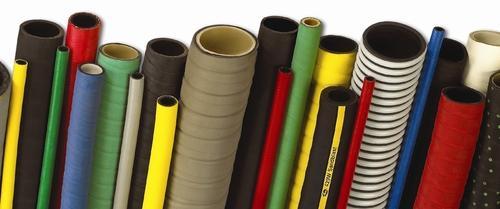
What is an industrial hose ?
An industrial hose is a flexible conduit designed to transfer various types of media, such as water, air, oils, chemicals, or gases, in industrial and technical processes. Industrial hoses are distinguished by a wide range of applications and high resistance to various mechanical, chemical, and thermal factors. They are an indispensable element in many industries, such as the chemical, food, construction, or automotive industries. Industrial hoses are available in various sizes, lengths, and specifications depending on the specific application. Before choosing a hose, pressure and temperature requirements, the substance being transferred, and other working conditions must be taken into account to ensure proper and safe functioning.
Most popular types of industrial hoses
Industrial rubber hoses
Rubber hoses are some of the most commonly used industrial conduits, characterized by high flexibility, abrasion resistance, and high durability. They are used in the transfer of water, air, oils, as well as certain chemical substances. Rubber hoses are often used in the construction and machinery industries.
Industrial water hose
Industrial water hoses are used to transport clean or dirty water in applications such as: Construction: Irrigation, rainwater drainage, pumping water on construction sites. Food industry: Transfer of drinking water or water used in food production processes. Agriculture: Irrigation systems and crop watering. Characteristics of water hoses: High resistance to water with varying degrees of contamination. Flexibility even at low temperatures. Durability with frequent use.
Industrial air hoses
Used in industry for the transfer of compressed air in pneumatic tools, assembly lines, or ventilation systems. Such hoses are distinguished by resistance to high pressure and a long service life.
Types of industrial hoses
We offer a wide range of various types of industrial hoses used in practically every industrial branch. Our offer includes both hoses as well as fittings for industrial hoses (ends and connectors).
- Industrial water hoses
- Hoses for the food industry
- Rubber hoses for cars
- Fire hoses
- Hoses for hot water and steam
- Sewer cleaning hoses
- Compressed air hoses
- Air conditioning hoses
- Air conditioning fittings.
- Automotive hoses
- Petroleum substances
- Marine industry hoses
- Welding hoses
- Abrasion-resistant hoses and fittings
- Hoses for food products
- Chemical substances
- Cable protection hoses
- Tekalan polyamide tubes and fittings
- PVC and PU hoses (extraction)
- CAMLOCK quick couplings
- DIN 28450 tanker couplings
- PERROT couplings
- EN 1092-1 flange couplings
- Plastering couplings
- Sandblasting couplings
- Claw couplings
- STORZ couplings
- Low pressure fittings
- Clamps
Other industrial hoses
Industrial hoses are flexible components used in various industrial sectors for transferring various substances such as air, water, oils, chemicals, fuels, and many others. They are designed and made of materials that are resistant to the substances being transferred and to working conditions such as high pressure, temperature, abrasion, or atmospheric factors. Here are several types of industrial hoses:
-
Pneumatic hoses: Used for transferring compressed air in various applications such as industrial pneumatics, pneumatic tools, pneumatic control systems, etc. They are usually lightweight, flexible, and resistant to high pressure.
-
Water hoses: Used for transferring water in various industrial applications such as cooling systems, washing, irrigation, etc. They can be made of various materials such as plastics, rubbers, or reinforced fabrics.
-
Oil hoses: Used for transferring oils, lubricants, fuels, and other oily substances in industrial machinery and equipment. They are resistant to oils and can be reinforced with materials such as stainless steel or textile fibers.
-
Chemical hoses: Designed for transferring various chemical substances, acids, solvents, and other aggressive chemicals. They are made of materials resistant to chemical action and can be reinforced with special protective layers.
-
Suction-discharge hoses: Used in the food, pharmaceutical, chemical, and other industries for transferring high-hygiene liquids such as juices, milk, food liquids, chemicals, etc. They are made of materials that meet food safety and hygiene requirements.
-
Heating and cooling hoses: Used in applications where it is necessary to transfer liquids at high or low temperatures, such as cooling systems, industrial heating, air conditioning, etc. They are temperature-resistant and can be reinforced with fire-resistant materials.
Industrial hoses – a comprehensive guide
What are industrial hoses and why are they crucial in various industries?
Industrial hoses are an indispensable element in many industrial sectors, providing efficient transfer of media such as liquids, gases, and even bulk materials. They are distinguished by high resistance to various working conditions, including extreme temperatures, pressure, and contact with chemical substances. Thanks to a wide range of available types, they are used in the chemical, food, petroleum, construction, and many other industries.
Types of industrial hoses – detailed classification
1. Hydraulic hoses
Hydraulic hoses are designed to work under high pressure, making them ideal for transferring hydraulic oils in industrial machinery and equipment. Key features: High pressure resistance. Resistance to oils and chemical substances. Application in construction, agricultural, and industrial machinery.
2. Chemical hoses
Chemical hoses are made of materials resistant to aggressive chemical substances. Typical applications: Transport of acids, bases, and solvents. Application in the chemical and pharmaceutical industries and wastewater treatment plants.
3. Food hoses
Designed for transferring food products such as milk, beer, or edible oils. Main advantages: Made of materials certified for food contact. Easy to clean and disinfect. Resistant to high temperatures.
4. Ventilation hoses
Used for transporting air and smoke. Characterized by: Flexibility and lightness. Abrasion resistance. Wide application in industrial ventilation and exhaust extraction.
5. Oil and fuel hoses
These hoses are used for transferring fuels, oils, and other petroleum products. Their properties include: Resistance to petroleum substances. Application in gas stations and refineries.
Construction and materials of industrial hoses
Industrial hose layers
Every industrial hose consists of three basic layers: Inner layer – provides resistance to the transported medium. Reinforcement – made of steel or textile braids, increases pressure strength. Outer layer – protects the hose against mechanical damage, abrasion, and atmospheric factors.
Materials used in production
-
Synthetic rubber: Chemical and mechanical strength.
-
PVC: Lightness and flexibility.
-
Silicone: High temperature resistance.
-
Teflon (PTFE): Extremely high chemical resistance.
Applications of industrial hoses
Chemical industry
Transporting aggressive substances such as acids and bases requires hoses with high chemical resistance.
Food industry
Food hoses are used in food production and packaging processes where materials complying with sanitary standards are required.
Construction industry
Hydraulic hoses and concrete hoses play a key role in operating construction machinery and in transporting concrete and mortars.
Oil and gas industry
This industry uses fuel hoses and specialized hoses for transporting gases and petroleum products.
Selecting the right industrial hose
To ensure safety and work efficiency, the following criteria should be considered:
-
Type of transported medium.
-
Required working pressure.
-
Operating temperature range.
-
Working environment (indoor or outdoor).
-
Requirements of standards and certificates.
Maintenance and storage of industrial hoses
To extend the life of industrial hoses, several rules should be followed: Regular inspection: Checking the technical condition of hoses for cracks, abrasions, and damage. Storage: Hoses should be stored in dry, shaded places, away from heat sources and chemical substances. Cleaning: Regular removal of internal and external contaminants using appropriate agents.
Why choose high-quality industrial hoses ?
Industrial hoses are a key element ensuring safe and efficient work in many industries. Their proper selection and maintenance affect the efficiency and durability of the systems in which they are used. By using our wide range of products, you can be sure of the highest quality products that meet rigorous standards and requirements.