Silicone hoses
Produkty z kategorii
Hoses, silicone lines for cooling systems
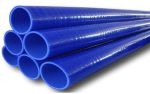
Hoses, silicone lines with a length of 1000mm for cooling systems and heating systems in buses and trucks. Blue hoses, reinforced with fabric layers, resistant to water and compressed air at temperatures from -40°C to 180°C. The hoses meet the requirements of the SAE J20R1 Class A standard. Our offer also includes rubber elbows for cooling systems and rubber hoses for cooling systems.
Straight silicone hose
Straight silicone hose manufactured from the highest quality silicone and additionally reinforced with four layers of polyester fabric. Silicone hoses are resistant to hydrolysis. The hose walls are calibrated, thanks to which they maintain the same diameter along the entire length and do not deform, preserving their parameters. Due to the materials used, silicone hoses are resistant to both low and high temperatures in the range of (-40°C ~ +180°C). The silicone hose performs well in oil mist, compressed air, and other similar media. Application: Silicone hoses are widely used in trucks and passenger cars, in exhaust air intake and outlet systems, heating systems for buses and trucks, and for air conditioning and cooling systems.
Technical parameters of straight silicone hoses :
- Connectors compliant with the standard: SAEJ20R1
- Type: Straight
- Length: 1000mm
- Inner Diameter: from 6mm to 115mm
- Working Pressure: Max 4bar
- Burst Pressure: Max 8bar
- Operating Temperature: - 40°C to +180°C
What are silicone hoses ?
Silicone hoses are modern solutions used in many industries, such as automotive, industry, and heating systems. Made of high-quality silicone rubber, they stand out for their exceptional resistance to high and low temperatures, UV radiation, ozone, moisture, and difficult weather conditions. Additionally, their surface is resistant to abrasion and tearing, which guarantees a long service life in demanding applications.
Silicone hoses are widely used in various fields: Automotive: Cooling, exhaust, and intake systems in turbochargers and breather systems, where resistance to high temperatures and oils is required. Heating and air conditioning systems: They perform perfectly in installations exposed to cyclical changes in temperature and humidity. Industrial systems: Transport of hot gases and liquids, vibration damping in high-pressure systems.
Properties of silicone hoses
- Temperature resistance: Operating range from -50°C to +180°C, with the possibility of short-term use up to +230°C.
- High insulation: Resistance to electrical breakdown and dielectric properties.
- Mechanical strength: Reinforcement made of polyester yarn with a tricot weave, ensuring resistance to stretching, pressure, and moisture.
- Versatility: Suitable for working in difficult conditions where flexibility and durability are required.
Available variants of silicone hoses
In our store, we offer silicone hoses in various diameters from 10 mm to 110 mm, tailored to specific requirements. Depending on the hose diameter, the wall thickness is 4 mm or 5 mm, which guarantees appropriate strength at different working and burst pressures. Why choose silicone hoses at Hydron ? Wide range of sizes: Perfect fit for the needs of systems with higher pressure and difficult operating conditions. Flexible orders: Possibility to purchase hoses in 1-meter sections. High quality: Products adapted to extreme operating requirements. Professional advice: Our specialists will help you choose the ideal hose for your needs. Silicone hoses available at Hydron are a guarantee of durability, reliability, and fast order fulfillment. Choose products tailored to your requirements and enjoy trouble-free operation in all conditions!
Silicone hose – what it is and what it is used for
A silicone hose is a flexible line made of high-quality technical silicone, which stands out for its very good resistance to temperature, aging, and environmental factors. Silicone hoses are not typical hydraulic hoses for high pressures – their main task is to transport air, gases, process liquids, and cooling media in conditions where flexibility, parameter stability, and thermal resistance are important.
Application of silicone hoses in practice
Silicone hoses are used in many branches of industry and automotive. They are commonly used as lines for air, cooling systems, ventilation, and vapor extraction. They are often found in industrial machines, heating devices, air conditioning systems, and in installations where standard rubber hoses do not meet the temperature requirements. Silicone hoses are also used in automotive, including intake systems, engine cooling systems, or in auxiliary installations. Their flexibility makes it easier to route lines in hard-to-reach places, and temperature resistance increases the safety of the entire system.
Temperature resistance and durability
One of the most important features of a silicone hose is its very wide operating temperature range. Silicone hoses can work in both negative temperatures and in environments with elevated temperatures where other materials lose their properties. Additionally, silicone is resistant to UV radiation, ozone, and aging, which means that the hoses maintain their parameters for a long time, even when working outdoors.
Silicone hoses vs other types of lines
Compared to rubber hoses, silicone offers much better parameter stability over time and greater temperature resistance. In turn, compared to PVC hoses, a silicone hose remains flexible at low temperatures and does not crumble. However, it should be remembered that silicone hoses are not intended for operation under high hydraulic pressure, so their selection should always be adapted to the operating conditions of the installation.
Automotive radiator hoses – application and properties
Automotive radiator hoses are system elements responsible for the correct flow of coolant or air in engine cooling systems. Their task is to maintain a stable operating temperature of the power unit and protect the engine against overheating. In modern vehicles, silicone hoses are increasingly used, which are distinguished by high thermal resistance, flexibility, and a long service life.
What are radiator hoses for in a car
Radiator hoses connect various elements of the cooling system, such as the radiator, engine, heater, or expansion tank. They are responsible for transporting the coolant, which absorbs heat from the engine and releases it in the radiator. The tightness of the system, stable engine operation, and vehicle operation safety depend on the quality of the hoses.
In passenger cars, vans, and trucks, radiator hoses work in variable temperature conditions and are exposed to vibrations, pressure, and material aging. For this reason, silicone hoses are increasingly chosen as a more durable alternative to classic rubber hoses.
Why silicone hoses are used in cooling systems
Silicone hoses used as automotive radiator hoses are characterized by very good resistance to high and low temperatures, which is of great importance in the engine compartment. Silicone does not harden over time, does not crack, and maintains flexibility even with intensive use. Thanks to this, silicone hoses ensure long-term tightness and stability of the cooling system operation. An additional advantage is silicone's resistance to aging, UV radiation, and atmospheric factors. Silicone hoses also withstand contact with coolants well and do not degrade as quickly as standard rubber hoses.
Application of silicone radiator hoses
Silicone radiator hoses are used in the cooling systems of internal combustion engines, both in series production cars and specialized vehicles. They are often used in motorsport, tuning, and in machines where the engine works at elevated temperatures. They also perform well in commercial vehicles, agricultural machinery, and industrial machinery where durability and resistance to intense operating conditions are important. Silicone hoses can be used as radiator hoses, heater hoses, bypass hoses, and other sections of the cooling system requiring a flexible and resistant solution.
Radiator hoses vs other types of hoses
Compared to classic rubber hoses, silicone hoses offer a much longer service life and more stable operating parameters. They do not lose flexibility under the influence of temperature and do not wear out quickly. However, it should be remembered that silicone hoses are primarily intended for cooling and air systems, and not for fuel transfer or work under very high pressure.