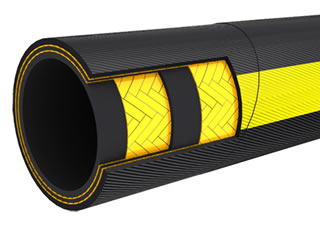
2SC hydraulic hoses

Produkty z kategorii
Hydraulic hoses compliant with the EN 857 2SC standard
The EN 857 2SC standard applies to hydraulic hoses used in high-pressure installations. EN 857 is a European standard that specifies technical requirements for the construction, performance, and testing methods of hydraulic hoses with textile or steel reinforcement. In particular, the 2SC designation refers to hoses reinforced with two steel braids, which gives them higher pressure resistance while being more flexible than other types of hoses. Below is key information regarding the EN 857 2SC standard:
Main assumptions of the EN 857 2SC standard:
- Application: The hoses are intended for use in hydraulic systems where high pressures occur, but a smaller bending radius is required compared to standard hydraulic hoses with similar pressure parameters.
-
Hose construction:
- Inner layer: Usually made of oil-resistant synthetic rubber (e.g., NBR - nitrile butadiene).
- Reinforcement: Two steel braids that provide high pressure resistance and reinforce the structure.
- Outer layer: Made of abrasion-resistant rubber, resistant to weather conditions and oils.
-
Pressure range: 2SC class hoses are designed to operate at maximum pressures that can reach up to 400 bar, depending on the hose diameter.
-
Bending radius: The EN 857 2SC standard defines a smaller bending radius for hoses compared to other steel-reinforced hydraulic hoses, meaning they are more flexible and suitable for installations where space is limited.
-
Tests and quality requirements:
- Pressure tests, which include working pressure, burst pressure, and test pressure.
- Pulsation resistance and flexibility tests at various temperatures.
-
Operating temperature range: Typically from -40°C to +100°C, which makes them suitable for operation in diverse environmental conditions.
Silicone-free hydraulic lines (LABS-free / PWIS-free)
At HYDRON, we also offer hydraulic hoses and industrial lines available with a LABS-free / PWIS-free (Silicone-Free) statement. This solution is intended for industries where even trace amounts of silicone can negatively affect painting processes and coating quality. If you want to find out what the LABS-free standard is, when it is required, and how to order lines with appropriate documentation.
Applications of EN 857 2SC hoses:
Hoses compliant with the EN 857 2SC standard are used in a wide range of industrial applications, such as:
- Hydraulic systems in construction machinery.
- Drive systems in vehicles.
- Agriculture and forestry industry.
- Industrial machinery and robotics.
What is the difference between 2SC hoses and 2SN
2SC and 2SN hoses are two types of hydraulic hoses that differ mainly in terms of construction, flexibility, and installation requirements, even though both types have similar applications in high-pressure hydraulic systems. Here are the most important differences between them:
Construction and flexibility:
- 2SC:
- 2SC hoses have a thinner outer layer, which makes them more flexible and usable in installations where greater flexibility is required.
- Thanks to the thinner outer layer, bending radius of 2SC hoses is smaller than that of 2SN hoses. This means they can be bent more easily in tight spaces, making them more versatile where space is limited.
- 2SN:
- 2SN hoses have a thicker outer layer, which increases their resistance to mechanical damage but simultaneously reduces their flexibility compared to 2SC hoses.
- The bending radius is larger, which means 2SN hoses are less flexible and require more space during installation.
Application:
- 2SC:
- 2SC hoses are preferred in applications where greater flexibility and the possibility of installation in tight places are required, e.g., in agricultural, forestry, or construction machinery.
- 2SN:
- 2SN hoses are more suitable in applications where the priority is resistance to mechanical damage, especially in places exposed to intensive abrasion or contact with hard surfaces. They are used in hydraulic systems where the bending radius is not as critical.
Outer layer thickness:
- 2SC: 2SC hoses have a thinner outer coating, which makes them more compact.
- 2SN: 2SN hoses have a thicker outer coating, which better protects them against external damage, such as abrasions or impacts.
Bending radius:
- 2SC: Smaller bending radius, which means the hoses can be bent at shorter distances without risk of damage.
- 2SN: Larger bending radius, which requires more space for installation compared to 2SC hoses.
Pressure range:
- Both types of hoses (both 2SC, as well as 2SN) have a similar range of working pressures and can be used in high-pressure systems; however, the differences result mainly from installation conditions, not working pressure.
Price:
- Hoses 2SC are usually more expensive due to their more complex construction, which provides greater flexibility and a more compact profile.
Summary:
- 2SC: More flexible, thinner construction, smaller bending radius – ideal for tight spaces, more compact, but slightly more expensive.
- 2SN: Thicker construction, more resistant to mechanical damage, less flexible, but cheaper and more abrasion-resistant.
The choice between 2SC and 2SN hoses depends mainly on specific installation and environmental requirements, such as the need for flexibility or resistance to damage.