










Fuel, gasoline, and oil hoses
Produkty z kategorii
Fuel hoses - for fuel, gasoline, oil
The following category contains hoses designed for fuel, gasoline, and oil, i.e., rubber fuel lines. Hoses used, among others, in automotive systems for the flow of petroleum fuels with an aromatic hydrocarbon content of up to 50%, including bioethanol (oxygen compounds up to max 15%) and biodiesel (80% diesel oil and 20% biocomponents - esters). Operating temperature of the hoses: from -30°C to +100°C, periodically +125°C. Inner layer: rubber, NBR, black, smooth; hose reinforcement with textile braid. Outer layer: rubber, NBR/PVC, black, resistant to atmospheric factors and high temperature. Hoses resistant to gasoline and diesel oil.
Construction of fuel hoses
Rubber hoses with textile braid often referred to as "canvas" or "fabric" braid. These hoses, unlike hydraulic hoses, do not have a steel braid. Fuel hoses are flexible, pliable, and relatively light. Hoses can be crimped onto ferrules that are smooth inside (e.g. thermoplastic ferrules ) A standard hose ferrule could cut through the textile braid. Fuel and gasoline hoses are low-pressure hoses, therefore the fittings used on them can also be secured by using clamping brackets (GBS). Braided oil lines - textile or wire braid.
Sizes of available fuel hoses Ø
At Hydron, we offer high-quality fuel hoses of various types, adapted to a wide range of applications in industry, automotive, and agriculture. Our hoses are available in many sizes, allowing for adjustment to diverse fuel systems. Range of available fuel hose diameters: Ø DN 03 mm, Ø DN 05 mm (3/16"), Ø DN 06 mm (1/4"), Ø DN 8 mm (5/16"), Ø DN 10 mm (3/8"), Ø DN 12 mm, Ø DN 13 mm (1/2"), Ø DN 16 mm (5/8"), Ø DN 18 mm, Ø DN 19/20 mm (3/4"), Ø DN 25 mm (1"), Ø DN 32 mm (1.1/4"), Ø DN 35 mm, Ø DN 38 mm, Ø DN 40 mm (1.1/2"), DN 45 mm, DN 50 mm (2"), DN 55 mm, DN 60 mm, DN 63 mm, DN 70 mm, DN 76 mm, DN 90 mm, DN 102 mm. Wide selection of diameters: From small DN03 mm to large DN102 mm, which allows for fitting to various applications. Hoses made of high-grade materials resistant to fuels and external conditions. Ideal for fuel systems in vehicles, agricultural machinery, industrial systems, and more. Check our offer of fuel hoses and find the perfect solution for your system!
Hydraulic lines without silicone content (LABS-free / PWIS-free)
At HYDRON, we also offer hydraulic hoses and industrial lines available with a LABS-free / PWIS-free (Silicone-Free) statement. This solution is intended for industries where even trace amounts of silicone can negatively affect painting processes and coating quality. If you want to learn what the LABS-free standard is, when it is required, and how to order lines with appropriate documentation.
Types of fuel hoses
Fuel hoses are elements used in fuel and oil transport systems. Depending on the needs and operating conditions, several types can be distinguished. Each type of hose is adapted to specific applications and ensures safety and reliability. In our wholesaler's offer, you will find hoses that meet the highest quality standards, ready to meet the requirements of your fuel installation. Basic types of fuel hoses:
- Textile braided hoses – light, flexible, and resistant to fuels, ideal for lower pressure installations.
- Suction-delivery hoses with internal wire – resistant to high pressure and stable, suitable for suction-delivery systems.
- Fuel dispenser hoses – designed for operation at gas stations, characterized by resistance to intensive use.
- Steel braided hoses – exceptionally durable and resistant to damage, recommended for working in difficult conditions.
Steel braided fuel hoses
We also offer special fuel hoses designed for high temperatures up to 280 degrees, wherever an ordinary hose would not cope, e.g., near engines or heat sources. PTFE Teflon hoses in stainless steel braid. These hoses are intended for crimping.
Reinforced fuel line
Reinforced fuel lines are elements in fuel and oil transfer systems, ensuring reliability and resistance to petroleum substances. Thanks to the internal textile reinforcement, the hose remains flexible while being characterized by increased mechanical strength. Why choose a reinforced fuel line? ✔ Textile reinforcement – the inner reinforcement layer increases resistance to working pressure and prevents deformation. ✔ Chemical resistance – dedicated to fuels, oils, and other petroleum-based substances. ✔ Flexibility – easily adapts to fuel systems without the risk of cracks or damage. ✔ Long service life – the reinforced construction ensures resistance to abrasion and material aging. Reinforced fuel lines are used in fuel systems of vehicles, industrial and agricultural machinery, as well as in fuel distribution systems. Thanks to solid workmanship, they are a reliable solution that ensures safety and work efficiency.
Fuel and oil hoses
What is fuel and why does it require special lines? Fuel is an energy substance used to power internal combustion engines and heating devices. It occurs in solid, liquid, or gaseous form, but liquid fuels such as gasoline and diesel oil are most commonly used in fuel systems. Due to their chemical aggressiveness, flammability, and safety requirements, high-quality fuel hoses resistant to petroleum substances are necessary for their transport.
Gasoline – fuel line requirements
Gasoline is a flammable mixture of hydrocarbons obtained in the crude oil refining process. Due to its properties, it must be transported safely in fuel lines, which means the necessity of using hoses with high chemical resistance. The following work best for this purpose: Textile reinforced hoses, which increase resistance to pressure and mechanical damage. Hoses with an internal layer resistant to fuels, which prevents material degradation. Flexible lines with smooth walls, minimizing flow resistance. Example application: ✔ Fuel systems of passenger cars and motorcycles ✔ Supply lines in agricultural and construction machinery ✔ Transport systems in gas stations.
Diesel oil – how to choose the right line?
Diesel oil is a fuel used in compression-ignition (Diesel) engines. It is less volatile than gasoline but requires equally high-quality fuel lines. Diesel oil hoses must be resistant to: ✔ Petroleum substances that can degrade standard rubber materials. ✔ Variable temperatures, as fuel can be transported in both frost and heat conditions. ✔ Working pressure, especially in installations supplying fuel to the engine. Example application: ✔ Vehicles with Diesel engines (trucks, tractors, construction machinery)
✔ Refueling and fuel distribution systems. ✔ Storage tanks and fuel installations.
What are petroleum products and why must lines be resistant?
Gasoline and diesel oil are petroleum products, i.e., substances obtained in the crude oil refining process. Hoses used in fuel systems must be made of materials resistant to contact with petroleum liquids to ensure the durability of the installation and avoid line degradation. Which lines work best in fuel systems? For fuel transfer, textile reinforced fuel hoses are most commonly used, which: ✔ Increase mechanical resistance – prevent cracks and deformations. ✔ Ensure flexibility – facilitate installation in hard-to-reach places. ✔ Are resistant to fuels and oils – guarantee long service life. At Hydron, you will find a wide selection of fuel and oil hoses adapted to various working conditions. Check the offer and choose the ideal line for your application!
Crude oil lines and hoses
What is a crude oil line? A crude oil line is a specialized hose adapted for the transport of liquid fuels, including diesel oil, gasoline, and other petroleum substances. Hoses of this type must be characterized by high resistance to the aggressive action of fuels and flexibility, allowing for their easy use in various fuel distribution and transport systems. In the Hydron store, you will find high-quality crude oil lines, including models reinforced with a textile braid, which guarantee durability and safety of use.
High-pressure fuel lines
Fuel lines referred to as high-pressure owe their name to the ability to work under high pressure, which makes them irreplaceable in systems requiring reliability and safety. Depending on the construction and materials used, these lines can be adapted to various levels of working pressure. An example could be standard fuel lines, such as textile braided hoses, which are characterized by pressure resistance at a level of about 10 bar. Such solutions work well in fuel systems with moderate load, e.g., in passenger cars, agricultural machinery, or fuel distribution systems. On the other hand, for applications where significantly higher working pressure is required, lines made of more durable materials, such as PTFE (polytetrafluoroethylene), are used. PTFE fuel lines in a steel braid can operate at pressures exceeding 100 bar, which makes them commonly used in high-performance vehicles, industrial systems, or systems requiring extreme resistance to temperature and aggressive chemicals. Thanks to the variety of available fuel line variants at Hydron, it is possible to precisely match the product to a specific application, guaranteeing maximum safety and efficiency of the fuel system.
Rigid fuel lines
Rigid fuel lines are used in installations where high dimensional stability, resistance to vibration, and precise guiding of the fuel medium are required. Unlike flexible lines made of rubber or plastics, rigid fuel lines are most often produced from steel, stainless steel, or copper, which ensures greater mechanical resistance and long service life under conditions of increased pressure and temperature. This solution is used in fuel supply systems of internal combustion engines, industrial installations, and fuel systems of agricultural and construction machinery. Properly selected rigid fuel lines guarantee tightness, corrosion resistance, and safe fuel transport without the risk of deformations or line kinks.
Hoses for oil, fluids, lubricants SAE/100 R6
SAE 100R6 – what is it and what is it used for? SAE 100R6 is a standard defining flexible hydraulic hoses for low-pressure applications, used mainly in power hydraulics systems for the transfer of hydraulic oils and other water-and petroleum-based fluids. It is a light, flexible line with a textile reinforcement layer, designed for operation in systems with low pressure loads and moderate temperatures. The SAE 100R6 hose consists of three layers: 1) Inner tube made of oil-resistant rubber (e.g., nitrile – NBR), ensuring tightness and resistance to hydraulic fluids. 2) Reinforcement layer – a single textile braid (most often made of polyester or aramid), which gives it flexibility and resistance to low pressures. 3) Outer cover made of abrasion-, ozone-, and weather-resistant rubber (e.g., neoprene – CR). Lines compliant with this standard are characterized by great flexibility and ease of installation, which makes them an ideal solution in places where the hose must be frequently bent or guided in tight spaces.
Application of oil hoses
SAE 100R6 is not suitable for high pressures and impulse systems. It is also not designed to work under vacuum, so it should not be used as a suction hose. It is also not recommended for the transfer of motor fuels or braking systems in vehicles. SAE 100R6 is used in low-pressure systems such as: ✔️ Hydraulic oil return lines to the tank, ✔️ Lubrication systems in machines and vehicles, ✔️ Oil cooling lines in transmission systems, ✔️ Hydraulic control systems in vehicles, e.g., power steering, ✔️ Air systems and low-pressure auxiliary pneumatic lines. This hose is widely used in agricultural and construction machinery, the automotive industry, and stationary hydraulics. Thanks to its high resistance to oil and external conditions, it can also be used in industrial installations. The SAE 100R6 hose is a flexible, light hydraulic line for low-pressure systems. Thanks to its simple construction and resistance to oils and atmospheric conditions, it is widely used in industrial machines and vehicles. However, its application is limited to return, lubrication, and cooling lines, and not to main hydraulic lines with high pressure. Other applications of fuel hoses: fuel dispenser hoses (refueling), hoses for fuel systems (fuel)
Technical parameters of SAE100 R6 lines
- Working pressure: 20–35 bar (depending on diameter),
- Working temperature: -40°C to +100°C (some versions up to +135°C),
- Safety factor: 4:1 (burst pressure ≥ 4x working pressure),
- Bending radius: Very low, which facilitates installation in tight spaces.
Oil-resistant rubber hose
What is an oil-resistant hose and what are its applications? An oil-resistant hose is a specialized hose made of materials resistant to petroleum substances such as oils, fuels, lubricants, and other chemical products. Thanks to proper construction and the use of high-quality rubber, oil-resistant hoses ensure durability and reliability in difficult working conditions. Oil-resistant rubber hoses stand out for several key properties: The materials used do not degrade under contact with gasoline, diesel, hydraulic oil, or other petroleum substances. Despite chemical resistance, the hoses remain flexible, which facilitates their installation and use in fuel or hydraulic systems. Hoses can be reinforced with a textile braid (for medium pressures) or a steel braid (for high-pressure hydraulic systems). Oil-resistant hoses can operate at temperatures from -30°C up to even +100°C, which allows for their use in many industrial and automotive applications. A special internal and external structure increases resistance to abrasion and mechanical damage.
Features of oil-resistant hoses
- resistance to fuels and oils
- high flexibility
- textile or steel braid
- wide operating temperature range
- durability and mechanical resistance
Fuel line for gasoline
A fuel line for gasoline, often also referred to as a rubber fuel hose, gasoline tubing, is one of the most important elements in the fuel supply systems of vehicles and machines. Its task is to safely and tightly transport fuel – both gasoline and diesel oil, biofuels, or mixtures with ethanol additives. Hydron's offer includes lines made of high-grade NBR rubber, reinforced with a textile braid, which guarantees exceptional durability and resistance to the effects of petroleum fuels and variable operating conditions. Thanks to its flexible construction and precise execution, the rubber gasoline hose with textile braid fits perfectly into fuel installations in passenger cars, trucks, agricultural, or industrial vehicles. This solution works well in both low-pressure systems and service applications where chemical resistance, tightness, and long line life are key. Each fuel hose available at Hydron has been designed to ensure maximum fuel flow safety and parameter stability even during long-term operation.
What distinguishes rubber fuel hoses with textile braid?
The fuel hoses available in the offer are characterized by a layered construction, in which a smooth inner layer made of NBR rubber guarantees resistance to contact with gasoline, diesel oil, or biocomponents. The reinforcement layer in the form of a textile braid gives the line high resistance to working pressure, and the flexible outer layer protects the hose from UV radiation, abrasion, and oil action. Thanks to this, these lines retain their properties for a long time and are resistant to aging and cracking. In practice, this means that the gasoline fuel line will perform perfectly in both passenger cars and agricultural machines, excavators, power generators, or industrial devices. Customers often use these lines also as fuel refueling hoses or dispenser hoses, where resistance to negative pressure and maintaining flexibility in various temperature conditions counts. In the case of heavier fuels, such as diesel oil, a crude oil hose or a diesel fuel line, available in many diameters and lengths, will also work perfectly.
Reinforced fuel hose
By choosing a reinforced fuel hose, you gain the certainty that the line will maintain appropriate mechanical strength even with intensive use. The textile braid acts as a reinforcement that prevents the line from expanding under pressure, while simultaneously allowing for flexibility and ease of installation. Thanks to this, the hose is resistant to vibration, bending, and mechanical damage, which is of great importance in vehicles and machines operating in difficult field or workshop conditions. Hydron products meet the highest quality requirements – they are resistant to fuels containing up to 50% aromatic components, and their working pressure is about 10 bar, with burst pressure reaching even 30 bar. Additionally, thanks to resistance to temperatures from-30°C to +100°C, the rubber fuel hose can be used in both winter and summer without losing its technical properties.
Fuel lines for gasoline and diesel
Hydron's offer includes fuel lines for gasoline and diesel that find application in almost every fuel system. They can be used for fuel transfer between the tank and the pump, for fuel return systems, and also as an element of refueling installations. Fuel tubing works perfectly in passenger cars, trucks, agricultural machines, forklifts, power generators, and workshop equipment. In the case of larger diameters, they perfectly fulfill the function of fuel refueling hoses or dispenser hoses, where both chemical resistance and high tightness matter. Thanks to various diameters and the possibility of cutting to size, the customer can choose a line perfectly matched to their own needs. The offer includes, among others, diameters of 6 mm, 8 mm, 10 mm, 12 mm, 16 mm, 20 mm, and larger. If necessary, Hydron specialists will advise which line will work best in a specific application – whether it will be a thin-walled hose for engine supply or a thicker line for refueling and fuel transfer in warehouses.
Fuel line – price
One of the frequent questions from customers is what is the price of a fuel line. In the Hydron offer, prices vary depending on the diameter, length, and type of braid, but are always competitive compared to the market. Lines can be purchased by the meter, allowing you to choose exactly as much material as is actually needed. Thanks to this, the purchase is economical, and wholesale discounts are possible for larger quantities. All products are covered by a quality guarantee, and their parameters are clearly described in catalog cards available on the store's website. By buying a gasoline fuel line or a diesel fuel line at Hydron, you gain the certainty that you are receiving a durable, safe, and proven product. Additionally, the company provides professional technical advice, thanks to which you can select the appropriate line not only for liquid fuels but also for oils, lubricants, or emulsions.
Semperit TU 25 hose
Universal oil-resistant and fuel hose for industrial applications. The Semperit TU 25 hose is a high-quality delivery hose designed for the transfer of fuels, oils, air, and water in demanding industrial conditions. Thanks to its resistance to abrasion, oils, and atmospheric factors, it is an excellent choice wherever reliability and safety are key. The Semperit brand has been a symbol of solidity in technical hoses for years, and the TU 25 model is one of the most frequently chosen hoses for workshop, service, and industrial applications.
Construction and design of the TU 25 hose
The TU 25 hose was designed for durability and work safety in contact with oils and fuels. It consists of three precisely selected layers: Inner layer (core) – made of NBR (nitrile) rubber, which is resistant to mineral oils, gasoline, fuels, and oil-air mixtures. It is smooth, flexible, and electrically conductive, which prevents the buildup of electrostatic charges. Reinforcement layer – a high-strength textile reinforcement that ensures shape stability and resistance to working pressure up to 25 bar. Outer layer (casing) – made of NBR/EPDM mixture, black, resistant to ozone, UV radiation, oils, and atmospheric factors. The surface is resistant to abrasion and mechanical damage, which means the hose maintains its aesthetic appearance and flexibility even after a long period of use. A characteristic element is three red longitudinal stripes and a white print with the marking "SEMPERIT S TU 25 Oil/Air PN 25 bar Antistatic", which confirms the originality and quality of the product.
Application of the Semperit TU 25 hose
The TU 25 hose is a solution with a very wide range of applications. It works perfectly in installations where contact with oils, fuels, and air media occurs. It is used, among others, for: transfer of gasoline, diesel oil, fuel and lubricating oils, transfer of air contaminated with oil mist (e.g., from compressors), work in mechanical workshops and hydraulic crimping facilities, supply of industrial machines and service equipment, general technical applications where a combination of flexibility and oil resistance is required. Thanks to its properties, TU 25 is one of the most frequently chosen hoses in the industrial, agricultural, and workshop sectors.
Fuel line – fuel lines for gasoline, oil, and diesel
What are fuel lines and what are they used for? Fuel lines are flexible elements of the fuel supply system that are responsible for the safe and tight transfer of fuel from the tank to the engine. They are a key link in every fuel system — both in automotive vehicles and in agricultural, construction, and industrial machines. High-quality fuel lines are available in the offer, which stand out for their resistance to gasoline, diesel oil (ON), biofuels, as well as high temperatures and working pressure. Thanks to this, they ensure operational reliability even in demanding working conditions.
Which fuel lines to choose?
The selection of the appropriate fuel line depends on the type of fuel used, working pressure, temperature, and environmental conditions. Lines with various internal diameters are available in the store, so they can be precisely matched to the type of installation – from low-pressure systems to high-pressure injector supply. In practice, several types of lines are used:
-
Rubber fuel lines – most often made of NBR rubber (nitrile rubber) resistant to gasoline, diesel, and mineral oils;
-
Textile braided fuel lines – provide additional mechanical protection, resistance to abrasion and UV radiation;
-
Steel braided fuel lines (steel braid) – used in places exposed to high pressures and temperatures;
-
Flexible lines for biofuels and hydraulic oil – with a layer resistant to aggressive additives in modern fuels
What are fuel lines called?
Fuel lines appear under various names depending on their purpose and construction. In the hydraulic and automotive industries, terms such as: fuel hose, fuel line, fuel and oil hose, rubber fuel hose, gasoline and diesel line, crude oil hose are encountered. Hydron's offer includes, among others, lines from renowned brand manufacturers that meet the requirements of European quality standards, ensuring full compatibility with various fuel supply systems.
What is the best fuel line?
The best fuel line is one that combines chemical resistance, flexibility, and mechanical durability. In practice, this means it: should be made of NBR or CR rubber compound, resistant to fuels and oils, have textile reinforcement or steel braid, be characterized by an operating temperature range from -30°C to +100°C, be resistant to ozone, abrasion, and UV action, ensure tightness and flexibility throughout the entire service period. Hydron offers fuel lines that meet these criteria and are used both in professional workshops and by machine manufacturers. Each product is properly described, which facilitates the selection of the correct model.
What type of fuel line is best?
The most universal and durable solution are braided fuel lines, especially in a steel braid. This type of line is characterized by exceptional resistance to mechanical damage and high pressures. The steel braid additionally protects the rubber core from cracks, increasing the life of the entire fuel installation. Textile braided versions are an economical and light solution, ideal for systems with lower working pressure. In contrast, steel lines or rubber lines with double reinforcement are used in commercial vehicles, agricultural, and construction machinery, where safety and durability count.
Braided fuel line – advantages and application
Steel braided fuel lines available in the Hydron store are a solution for demanding users. The braid protects the line from abrasion, impact, and overheating, which is of great importance in fuel installations working near heat sources. Lines of this type are used in: sports and tuning vehicles, construction and agricultural machinery, fuel systems with high-pressure pumps, industrial installations transporting oils and fuels. At Hydron, we offer fuel lines in various lengths, diameters, and configurations, adapted to work with a wide range of fuels and oils.
Check also:
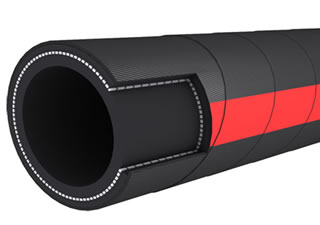
Photo gallery concerning fuel hoses


